
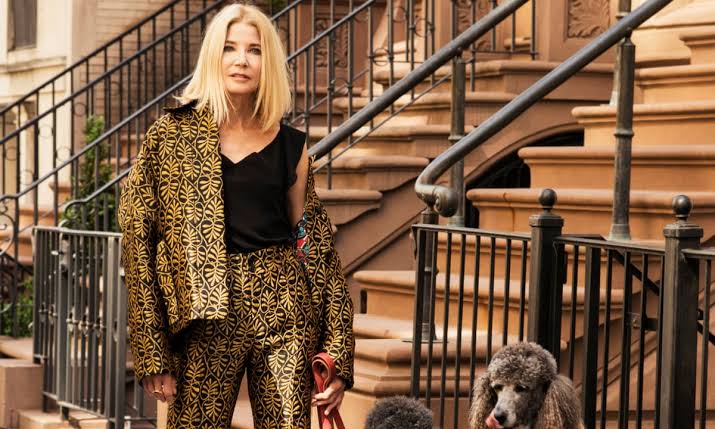
The Origins of a Cultural Voice
Candace Bushnell’s legacy begins not in a television writers’ room or a Hollywood studio, but in the pages of The New York Observer during the mid-1990s. It was there that she started documenting the glittering, messy, and magnetic lives of New York’s single women — a generation discovering its independence in an era of ambition and reinvention. Long before Sex and the City became a global phenomenon, Bushnell was already shaping how the world would understand modern femininity, dating, and urban aspiration.
Bushnell’s voice emerged at a cultural crossroads. The 1990s were a decade when American women were beginning to reimagine success: climbing corporate ladders, buying their own apartments, and speaking frankly about love and lust. Her column, “Sex and the City,” captured that evolution with wit, irony, and emotional clarity. The women she wrote about weren’t just chasing men; they were chasing identity, meaning, and self-worth in a city that demanded both glamour and grit.
When the column became a book in 1997, Sex and the City found an audience far beyond New York. Bushnell’s sharp observations, often drawn from her own life and circle of friends, turned into a mirror for countless readers navigating the contradictions of independence and intimacy. The stories were not fairy tales — they were dispatches from a front line of cultural change.

From Page to Screen: A Phenomenon Takes Shape
What followed, of course, was history: HBO’s Sex and the City launched in 1998 and ran for six groundbreaking seasons. Though Bushnell wasn’t involved in the show’s day-to-day writing, her DNA was in every episode. Carrie Bradshaw, portrayed by Sarah Jessica Parker, was Bushnell’s alter ego — a columnist chronicling love and loneliness in Manhattan. The show transformed Bushnell’s column into a generational touchstone, blending humor, heartbreak, and high fashion into a cultural lexicon.
While television elevated Sex and the City to pop-culture immortality, Bushnell continued writing. Her follow-up collection Four Blondes (2000) dissected the ambitions of New York’s elite, while Trading Up (2003) and Lipstick Jungle (2005) examined power and reinvention. Each novel built on her recurring themes: women asserting themselves within systems designed to define them. One Fifth Avenue (2008) shifted her lens to real estate and status; The Carrie Diaries (2010) traced the fictionalized teenage years of her most famous creation.
Also read : Darius Taylor: Rising Star of Minnesota Golden Gophers Football
Thematic Continuity and Literary Evolution
Throughout her career, Bushnell’s storytelling has remained consistent in tone — sophisticated, incisive, and unflinchingly honest. She writes about women who refuse to apologize for wanting more: more love, more success, more beauty, more control. This ethos became part of her enduring brand.
As the cultural conversation evolved, so did Bushnell. In 2019, she published Is There Still Sex in the City?, a memoir-style reflection on dating after fifty. The book — and its subsequent stage adaptation — reframed her legacy through a contemporary lens. Instead of champagne brunches and designer shoes, Bushnell discussed dating apps, loneliness, and female friendship in middle age. It reminded audiences that the Sex and the City story was never about youth — it was about the ongoing reinvention of womanhood.
Her evolution as a writer mirrors the evolution of her readers. In the 1990s, Bushnell spoke to thirty-somethings balancing ambition and affection. By the 2020s, she was addressing a generation of women redefining what it means to age with confidence and humor. Through it all, her voice has remained singular: sharp yet empathetic, glamorous yet grounded.
Shaping a Genre: The Bushnell Blueprint
Bushnell’s literary influence extends far beyond her books. She helped usher in a genre that blends journalistic realism with fictional flair — a format that inspired writers like Lauren Weisberger (The Devil Wears Prada) and Emily Giffin (Something Borrowed). The “Bushnell blueprint” — mixing lifestyle commentary with emotional depth — became a template for modern women’s fiction and pop journalism alike.
But perhaps her greatest achievement lies in her reshaping of female archetypes. Before Sex and the City, popular culture often divided women into limited roles: the wife, the lover, the career woman. Bushnell exploded those boundaries. Her characters could be ambitious and vulnerable, fashionable and flawed, self-sufficient yet searching. In doing so, she offered women permission to be complex — and made that complexity desirable.
Cultural Debates and Feminist Reappraisal
The Sex and the City television series magnified those ideas, but it also sparked debates about privilege, consumerism, and representation. Critics accused the show of glamorizing excess; defenders hailed it for normalizing female autonomy and sexual expression. Bushnell herself has navigated these contradictions with candor, often acknowledging both the empowerment and the irony within her work.
When asked how closely she identifies with Carrie Bradshaw, Bushnell often answers with humor and distance. “Carrie Bradshaw is me — and she’s not me,” she once said. It’s a line that encapsulates her entire career: personal yet performative, authentic yet self-aware.
Beyond the iconography of the show, Bushnell’s impact is visible in the cultural vocabulary it spawned. Phrases like “Mr. Big,” “the city as a character,” and “urban tribe” entered common usage. Her work predated social media, yet anticipated the performative nature of self-branding that defines modern life. Today’s influencers owe as much to Bushnell’s Carrie as to any digital pioneer — both use storytelling to turn personal experience into public identity.
New York as Character and Catalyst
Her New York remains central to her mythos. For Bushnell, the city is more than a backdrop; it’s an emotional ecosystem where ambition, romance, and reinvention collide. She has described it as “the one relationship that never leaves you.” That sentiment captures why Sex and the City endures: because the city itself symbolizes possibility — the idea that one’s next great chapter might begin at any corner café or chance encounter.
Over time, Bushnell’s career has also sparked discussions about the commercial power of female-driven storytelling. The success of her brand demonstrated that narratives centered on women’s experiences could dominate mainstream entertainment. In the post-Bushnell landscape, women’s voices — once confined to niche “chick lit” shelves — now shape billion-dollar franchises.
Writer Before Icon
Still, Bushnell remains a writer first. Even as Hollywood continues to reinterpret her work, she has stayed grounded in the act of writing itself. Her essays and interviews reveal an artist fascinated by change — not just cultural change, but the personal transformations that define adulthood. Whether she’s chronicling 20-something party girls or 50-something singles, she approaches each story with curiosity rather than judgment.
This journalistic sensibility sets her apart. Bushnell observes her subjects with the same clarity she once brought to her newspaper columns. She sees the humor in heartbreak, the absurdity in aspiration, the poetry in loneliness. Her best work finds humanity in contradiction.
Reassessment in the Modern Era
In recent years, as conversations about feminism, inclusivity, and gender identity have deepened, Bushnell’s legacy has been re-examined. Some critics argue that her early work reflects a narrower view of womanhood shaped by 1990s privilege; others see her as a trailblazer who opened the door for more diverse voices to follow. Both views hold truth. Like the city she immortalized, Bushnell’s world is layered, dynamic, and occasionally polarizing.
What remains indisputable is her influence. Without Candace Bushnell, there is no Sex and the City — but there is also no Girls, no Fleabag, no wave of female-driven storytelling that blurs the line between confession and commentary. Her fingerprints are on every witty essay about modern dating, every podcast dissecting urban relationships, every show where women speak freely about desire and disappointment.
The Enduring Message of Reinvention
As the entertainment industry continues to revisit Sex and the City through sequels and spin-offs, Bushnell’s original insight remains the foundation: that women’s stories, in all their glamour and messiness, matter.
She often says she never set out to write a cultural manifesto — she was simply trying to make sense of her own experiences. Yet in doing so, she gave countless others the language to make sense of theirs.
Today, Bushnell divides her time between writing, speaking engagements, and performing her stage show Is There Still Sex in the City?, a witty blend of memoir and monologue. On stage, she revisits her journey from small-town Connecticut girl to Manhattan chronicler, offering an intimate glimpse at the woman behind the phenomenon.
Her humor remains intact, her curiosity undimmed. When audiences laugh at her stories of love, loss, and reinvention, they’re not just reminiscing about the past — they’re acknowledging how far society has come since her words first appeared in newsprint.
The Candace Bushnell Sex and the City Legacy
The Sex and the City legacy isn’t just about fashion or friendship. It’s about the power of storytelling to shift cultural expectations. Candace Bushnell turned personal observation into social narrative, and in doing so, she became one of the most influential chroniclers of modern womanhood.
Even decades later, her message endures: that identity is fluid, that love is complicated, and that the search for meaning — in the city or beyond — is universal. Her voice remains both of its time and timeless, forever tied to the skyline that made her stories sparkle.