
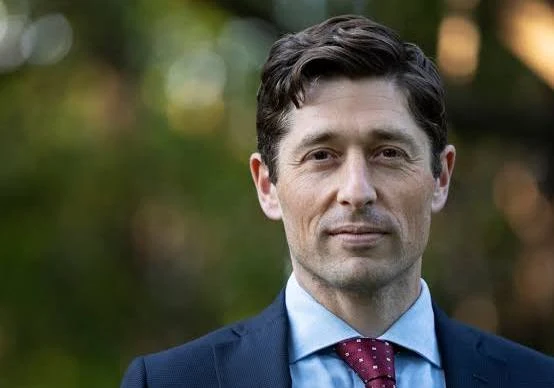
Minneapolis Mayor Jacob Frey has become one of the most visible political figures in Minnesota, particularly during a time of profound social change and civic transformation. As conversations about leadership and accountability continue, many people ask: What political party is Jacob Frey affiliated with?
The answer is clear — Jacob Frey is a dedicated member of Minnesota’s Democratic–Farmer–Labor Party (DFL), the state’s unique branch of the national Democratic Party. But his story, his leadership, and his approach to governance reveal much more than a simple party affiliation.
This article takes a deep look into Frey’s DFL background, his evolution from community advocate to city leader, and how his policies both reflect and challenge his party’s core values.
Jacob Frey’s Early Journey: From Athlete to Advocate
Jacob Frey’s path into public service is unconventional yet deeply American. Born in 1981 in northern Virginia, he grew up in a middle-class family that valued determination, education, and civic duty. Before entering politics, Frey was a professional long-distance runner who represented the United States in international marathons — a pursuit that required resilience and focus, qualities that would later define his political style.
After earning his law degree from Villanova University, Frey relocated to Minneapolis to practice employment and civil rights law. His work focused on protecting workers’ rights and ensuring fair treatment — causes that mirrored the DFL’s traditional commitment to labor and justice.
Frey soon became active in local civic issues, volunteering for neighborhood organizations and supporting initiatives to improve housing access and economic opportunity. His combination of charisma, discipline, and community-mindedness quickly made him a recognizable name in Minneapolis politics.
In 2013, he successfully ran for the Minneapolis City Council, representing the Third Ward — a diverse district including parts of downtown and northeast Minneapolis. His campaign, strongly backed by DFL supporters, focused on affordable housing, equity, and neighborhood development.
By 2017, Frey’s reputation as a practical reformer propelled him into the race for Mayor of Minneapolis, where he won with wide support from moderate Democrats, labor groups, and young professionals.
Read too : Tish Hyman Gold’s Gym Showdown: The Viral Clash That Sparked a National Debate
Understanding the DFL: Minnesota’s Progressive Powerhouse
To fully understand Jacob Frey’s political identity, one must understand the Democratic–Farmer–Labor Party (DFL) — a uniquely Minnesotan institution.
Formed in 1944 through the merger of the state’s Democratic Party and the Farmer–Labor Party, the DFL was built on progressive ideals and the spirit of working-class solidarity. It represented a coalition of urban laborers, rural farmers, and social justice advocates united against corporate dominance and inequality.
Historically, the DFL has produced some of America’s most influential liberal leaders, including:
- Hubert H. Humphrey, a civil rights pioneer and former U.S. Vice President
- Walter Mondale, Vice President under Jimmy Carter
- Paul Wellstone, the late Senator celebrated for his grassroots progressivism
The DFL platform has long focused on:
- Workers’ rights and fair wages
- Accessible healthcare and education
- Environmental sustainability
- Civil rights and equality for all communities
Jacob Frey’s alignment with the DFL places him in this progressive lineage, though his centrist and pragmatic approach often distinguishes him from the party’s more left-wing members.
Frey’s Policy Priorities: DFL Values in Action
Since taking office, Mayor Frey has sought to translate DFL ideals into actionable urban policy. His leadership highlights three recurring themes: housing affordability, climate responsibility, and racial equity.
1. Affordable Housing and Inclusive Development
One of Frey’s hallmark achievements is his administration’s focus on expanding affordable housing options across Minneapolis. His housing agenda emphasizes both public investment and private-sector collaboration — a pragmatic approach to achieving DFL social goals.
Through programs like the Affordable Housing Trust Fund and zoning reforms under the Minneapolis 2040 Plan, Frey has pushed to dismantle exclusionary housing practices and allow more multi-family development.
This plan, which ended single-family-only zoning, aimed to address racial and economic segregation — aligning strongly with the DFL’s belief in inclusive communities and equal opportunity.
2. Climate Action and Environmental Sustainability
Under Frey’s leadership, Minneapolis has strengthened its commitment to combating climate change. His administration advanced initiatives to reduce carbon emissions, improve public transportation, and promote renewable energy.
The city has also invested in green infrastructure, urban tree planting, and climate resilience projects, reflecting the DFL’s dedication to environmental justice.
3. Civil Rights and Racial Equity
The DFL has deep roots in civil rights advocacy, and Frey’s administration has tried to honor that legacy through policies promoting racial equity and social inclusion. This includes increased funding for community programs, reforms in city procurement practices, and greater representation of marginalized voices in decision-making.
Navigating DFL Divisions: Moderation in a Polarized Era
While Frey’s platform aligns broadly with DFL principles, his tenure has exposed the growing ideological divisions within the party. Like many Democratic organizations nationwide, the DFL houses a spectrum from pragmatic moderates to democratic socialists — and Frey’s centrist leadership often lands him in the middle of that spectrum.
1. The George Floyd Era
The murder of George Floyd in 2020 and the subsequent protests reshaped Minneapolis politics — and tested Frey’s leadership. His handling of policing and public safety became a lightning rod for criticism from both sides.
Many progressives within the DFL demanded the abolition or defunding of the Minneapolis Police Department, while Frey advocated for reform rather than dismantling. He argued that sustainable change required institutional accountability and community oversight, not abrupt elimination.
This stance drew frustration from the party’s left wing but respect from moderates who valued stability amid crisis.
2. Intraparty Election Challenges
During his re-election campaigns, Frey faced challengers from within the DFL who positioned themselves as more progressive alternatives. Critics accused him of being too business-friendly or resistant to radical reform.
However, Frey’s message of balanced progressivism resonated with many DFL voters who believed effective leadership required pragmatism and consensus-building.
The Frey Philosophy: Progressive Realism
Jacob Frey’s governing style could best be described as progressive realism — a philosophy that blends idealism with evidence-based governance. He acknowledges the need for bold social progress but grounds his decisions in practical, measurable outcomes.
This approach mirrors the centrist tradition within the DFL, emphasizing coalition-building and fiscal responsibility alongside progressive values.
In public speeches, Frey often stresses the importance of empathy and listening. His leadership model prioritizes results through cooperation — even when it means negotiating with groups that hold opposing viewpoints.
DFL’s Influence on Minneapolis Governance
The DFL’s dominance in Minneapolis shapes nearly every aspect of the city’s political life. Most local leaders, including City Council members and state legislators, are affiliated with the DFL, making the real political contest an internal one between moderate and progressive factions.
Under Frey’s leadership, several DFL-driven policy areas have flourished:
- Equity-Based Budgeting: Directing resources toward communities historically marginalized by systemic inequities.
- Green City Initiatives: Expanding renewable energy usage and setting a 2050 carbon-neutrality goal.
- Public Safety Reform: Introducing mental health crisis response teams and community-based violence prevention programs.
- Small Business Recovery: Supporting local entrepreneurs affected by the pandemic and civil unrest.
These initiatives show how Frey’s administration continues to interpret and apply DFL values in a modern urban context.
Criticism from the Left: The Limits of Pragmatism
Despite notable achievements, Frey’s pragmatic approach has sparked criticism from more progressive DFL circles.
1. Police Reform Disputes
Progressives argue that Frey’s resistance to defunding the police contradicted the DFL’s social justice priorities. Activists accused him of prioritizing public order over transformative change, while his supporters contend that his cautious strategy has prevented political gridlock and protected vulnerable neighborhoods.
2. Housing and Gentrification
Although Frey expanded affordable housing initiatives, some critics claim his market-driven solutions favor developers over residents. Calls for stronger rent control and public housing investments have grown among DFL progressives seeking deeper structural reform.
3. Relationship with Activist Movements
Frey’s cautious relationship with activist groups has been another flashpoint. His attempts to maintain balance between public safety and protest rights were met with mixed reactions.
Yet, his refusal to pursue populist rhetoric in times of tension demonstrates his belief that leadership requires principled steadiness, not political expediency.
Jacob Frey and the Modern DFL: A Balancing Act
Frey’s political journey mirrors the transformation of the DFL itself. Once defined by its labor-populist origins, the party now grapples with a diverse coalition of climate activists, racial justice advocates, urban professionals, and small business owners.
Within this evolving landscape, Frey represents a new generation of DFL leaders—those striving to unify progressive goals with practical governance. His focus on measurable outcomes rather than ideological purity reflects a broader shift toward results-driven progressivism.
The DFL’s challenge, and Frey’s, lies in maintaining credibility with both the progressive base and centrist voters, a balance crucial for long-term political stability in Minneapolis and beyond.
National Significance: A Model for Democratic Urban Governance
Jacob Frey’s story carries lessons that resonate far beyond Minnesota. His experience embodies the complex dynamics facing Democratic mayors nationwide—leaders who must navigate activism, governance, and economic recovery all at once.
Cities like Seattle, Portland, and San Francisco face similar tensions between progressivism and pragmatism. In that sense, Frey’s leadership in Minneapolis serves as a case study in modern Democratic urban politics — striving to advance social equity while maintaining functional institutions.
For the national Democratic Party, figures like Frey symbolize the challenge of governing effectively in polarized times, where compromise is often mistaken for weakness, and leadership requires courage to stand between competing extremes.
Community Engagement: The Human Side of Frey’s Leadership
Beyond policy, Frey’s commitment to civic engagement underscores his DFL values. His administration has emphasized open government, participatory budgeting, and youth leadership programs to build trust between citizens and City Hall.
These initiatives echo the DFL’s long-standing belief that democracy works best when everyone has a voice. By empowering communities to take part in local decision-making, Frey reinforces the DFL’s grassroots ethos of inclusion and accountability.
The Road Ahead: Frey’s Legacy and Minneapolis’s Political Future
As Minneapolis continues to rebuild and redefine itself, Jacob Frey’s leadership will remain a pivotal chapter in the city’s history. His tenure reflects both the promise and the challenges of governing through progressive realism — a balancing act between ambition and restraint.
The question “What political party is Jacob Frey affiliated with?” opens the door to understanding more than just his registration; it reveals his enduring connection to a political movement built on hope, equality, and collective progress.
Frey’s success or failure will help shape how the DFL — and the broader Democratic movement — adapt to the changing realities of urban America.
Conclusion: DFL Roots and the Future of Progressive Leadership
Jacob Frey’s affiliation with the Democratic–Farmer–Labor Party defines his political identity and shapes his approach to leadership. Through both triumphs and controversies, he has embodied the DFL’s central values: fairness, inclusion, and civic responsibility.
Yet, his pragmatism also highlights the evolving face of progressive politics — one that values practical results alongside moral conviction. As the DFL continues to navigate internal debates over policing, housing, and climate policy, leaders like Frey remind voters that governance is not just about ideology, but about making change that lasts.
Ultimately, Frey’s DFL roots are not merely a label—they are a reflection of Minnesota’s enduring belief in community, equality, and the power of democracy to move forward, together.