
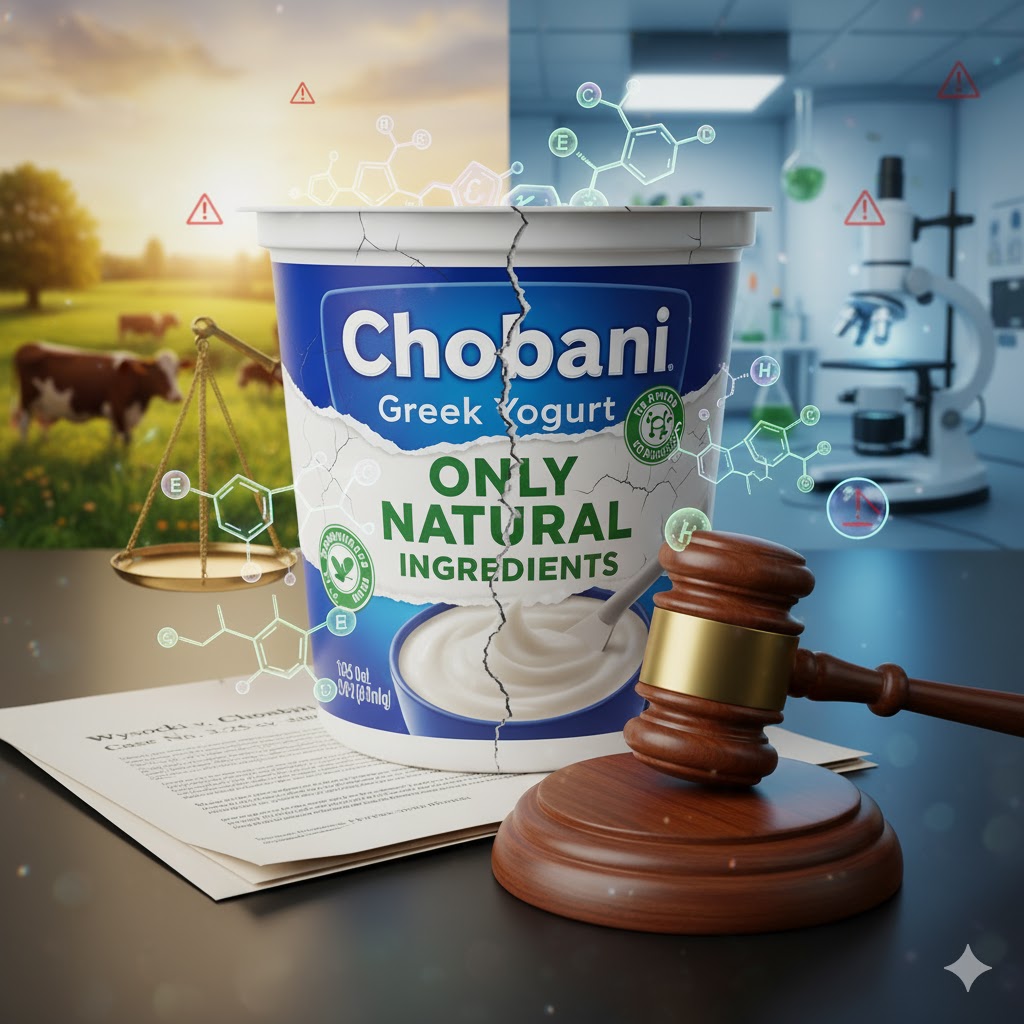
I. The Core Allegation: Toxic Phthalates in Chobani Yogurt
The class action, filed by plaintiff Amy Wysocki in a California federal court, is a direct challenge to Chobani’s public commitment to providing products free of artificial or harmful substances. The complaint centers on a fundamental breach of this promise: the alleged presence of plastic-derived chemicals in yogurts explicitly marketed with the phrase “Only Natural Ingredients.”
A. The “Only Natural Ingredients” Discrepancy
Chobani’s packaging prominently features the assertion that its yogurts are made with “Only Natural Ingredients,” often alongside disclaimers regarding the absence of artificial flavoring, sweeteners, and preservatives. This language is the cornerstone of the brand’s identity and value proposition, driving consumers—like the plaintiff—to believe the product is pure and untainted by synthetic compounds.
However, the lawsuit claims that independent, third-party testing revealed the presence of several man-made plastic chemicals in two key products:
- Chobani Nonfat Plain Greek Yogurt
- Chobani Whole Milk Plain Greek Yogurt
The discovery of chemicals like Di-2-ethylhexyl phthalate (DEHP), Diethyl phthalate (DEP), and Dibutyl phthalate (DBP) allegedly contradicts Chobani’s labeling and forms the basis for the consumer deception claims.
B. What Are Phthalates? The Endocrine Disruption Crisis
To understand the severity of the allegations, one must understand the nature of phthalates and their classification as EDCs.
Phthalates are a family of synthetic organic compounds primarily used in the manufacturing of plastics—specifically, polyvinyl chloride (PVC)—to make them softer, more flexible, and more durable. In the food industry, they are typically introduced into the food supply through two main vectors:
- Packaging Migration: Leaching from the plastic containers, lids, or seals used to hold and preserve the food, especially fatty products like yogurt.
- Processing Equipment: Contamination from plastic tubing, conveyor belts, or gloves used during manufacturing.
The Endocrine Threat
The lawsuit emphasizes that phthalates are not merely industrial contaminants, but are potent endocrine-disrupting chemicals (EDCs). The endocrine system is a network of glands that produce hormones, which regulate nearly every physiological process, including:
- Metabolism and energy levels.
- Growth and development.
- Reproductive function.
Phthalates allegedly interfere with this system by mimicking or blocking natural hormones. The complaint references public health experts and the United States Environmental Protection Agency (EPA), which has reported these chemicals as probable human carcinogens. The health concerns detailed in the litigation include:
- Developmental issues in children.
- Reproductive health problems (especially in males).
- Neurological effects.
- Increased risk of certain cancers.
The crux of the argument is that consumers would not knowingly purchase a product marketed as “natural” if they were aware it contained unsafe levels of chemicals known to be endocrine disruptors.
II. The Legal Battleground: Wysocki v. Chobani LLC
The legal strategy employed by the plaintiffs against Chobani is multifaceted, leveraging a range of California’s rigorous consumer protection statutes.
A. Breakdown of the Consumer Claims
The class action seeks to represent all individuals in the United States who purchased the affected Chobani yogurt products. The specific causes of action brought against Chobani LLC include:
- California Consumers Legal Remedies Act (CLRA): This claim targets deceptive advertising and fraudulent misrepresentations made to consumers regarding the product’s natural composition.
- California Unfair Competition Law (UCL): The UCL is a broad-reaching statute that prohibits any “unlawful, unfair, or fraudulent” business act or practice. The plaintiff alleges that mislabeling a product that contains toxic plasticizers constitutes a fraudulent and unfair business practice.
- California False Advertising Law (FAL): This claim asserts that Chobani’s prominent labeling of “Only Natural Ingredients” is literally false and misleading, causing consumers to purchase a product they otherwise would have avoided.
- Breach of Express Warranty: By labeling the product as having “Only Natural Ingredients,” Chobani allegedly created an express warranty that the yogurt was free from man-made toxic chemicals like phthalates. The presence of these chemicals constitutes a breach of that warranty.
- Unjust Enrichment: This claim contends that Chobani unjustly profited from selling mislabeled products at a premium price, retaining money that rightfully belongs to the consumers who suffered economic injury by overpaying.
B. Current Litigation Status: Awaiting the Judge’s Written Order
The lawsuit has reached a critical juncture—the defense’s attempt to end the case early. The current status, as of late October 2025, is as follows:
- The Defense’s Motion: Chobani filed a formal Motion to Dismiss the complaint, arguing that the plaintiff’s claims are legally insufficient.
- The Hearing: A formal Motion Hearing was held on August 20, 2025, before District Judge James E. Simmons, Jr.
- “Taken Under Submission”: Following the hearing, the court minute entry recorded that the motion was “taken under submission.” This means the judge is currently reviewing all arguments and evidence before rendering a final, written decision.
- Status Update: The written order on the Motion to Dismiss has not yet been publicly released. The outcome of this ruling will determine whether the case proceeds to discovery and potential class certification or if it will be dismissed.
C. Contextualizing Labeling Litigation: Chobani’s Legal History
The current phthalates lawsuit is not Chobani’s first encounter with legal challenges over its product transparency. These prior cases establish a pattern of consumer scrutiny regarding the brand’s labeling practices:
- The “Zero Sugar” Lawsuit: Chobani successfully defeated a separate class action that alleged its “Zero Sugar” yogurt was falsely advertised because it contained allulose (a naturally occurring sugar substitute).
- The “Natural” Ingredients Debate (Stevia/Monk Fruit): A federal judge allowed part of a different lawsuit concerning “Only Natural Ingredients” claims to proceed, suggesting courts are willing to look at the processing level of an ingredient when assessing “natural” claims.
III. Phthalates, Food Safety, and the Regulatory Landscape
The Wysocki lawsuit forces a broader conversation about chemical migration and the adequacy of food safety regulations in the face of modern packaging materials.
A. The Mechanism of Chemical Migration
Phthalates are not chemically bound to the plastic polymer. They are additives that can “migrate” or leach out when exposed to certain conditions. This migration is accelerated by:
- Fat Content: Dairy products, especially those containing higher milk fat, are powerful solvents for fat-soluble compounds like phthalates, increasing the rate of leaching.
- Temperature: Storage temperature, particularly during shipping and in-store displays, can significantly affect migration rates.
- Time: The longer the product sits in the plastic container, the greater the opportunity for chemical transfer.
The fact that the lawsuit targets both nonfat and whole milk Greek yogurt indicates that the plaintiffs’ testing allegedly found these chemicals across the spectrum of the product line, underscoring the potential ubiquity of the contamination source.
B. Consumer Safety Concerns and Regulatory Gaps
While the EPA has classified certain phthalates as probable human carcinogens, the question of their regulatory status in food contact materials remains complex.
The lawsuit highlights a consumer desire for zero risk that often outpaces the slow pace of food safety policy. Consumers assume “natural” equals “safe,” particularly concerning chronic, low-level exposure to EDCs. Phthalate exposure is a concern because it is cumulative; even trace amounts from multiple daily sources can contribute to a significant overall body burden.
This class action serves as a crucial mechanism for consumer advocacy, attempting to use consumer protection laws to force transparency and change in the food packaging supply chain where federal food regulations may be slow to adapt.
IV. Industry Implications and the Future of the ‘Natural’ Label
The lawsuit has already sent tremors through the $8 billion Greek yogurt market and the wider natural foods sector.
A. The Permanent Damage to the “Natural” Food Market
The “natural” label is one of the most powerful marketing tools in the food industry, allowing brands to command a price premium. This lawsuit, however, further erodes the value of that term by exposing its legal ambiguity and vulnerability to contamination challenges.
Competitors like Fage and Stonyfield Organic have already taken proactive steps in the past to publicly commit to phthalate-free packaging, pressuring all food manufacturers, especially those marketing premium “natural” or “clean label” products, to perform rigorous third-party testing on their products and packaging.
B. Packaging Innovation and Transparency
The long-term industry response will likely involve a costly, yet necessary, transition in packaging technology and auditing:
- Phthalate-Free Plastics: Shifting to plastic resins that do not require phthalate plasticizers.
- Glass and Bioplastics: Increased consideration of alternatives like glass or advanced bioplastics.
- Supply Chain Audits: Implementing stringent auditing procedures that track packaging components and processing aids all the way back to the polymer manufacturer to ensure no EDCs are introduced.
C. What This Means for Consumers and Class Members
For consumers who purchased Chobani’s Nonfat Plain Greek Yogurt and Whole Milk Plain Greek Yogurt, the lawsuit represents an opportunity to recover damages for the alleged overpayment for a deceptively labeled product.
If the lawsuit is certified as a class action and proceeds, a class member would potentially be eligible for a monetary payout from a settlement or judgment, though the primary goal of such litigation is often injunctive relief—forcing the company to change its labeling, testing, or packaging practices.