

The dawn of the instantaneous energy era is officially here.
By Tech Editorial Team | Updated: January 2026
For the better part of three decades, the human race has been tethered. We are a civilization of explorers, innovators, and digital nomads, yet our daily range has been strictly dictated by the chemical limitations of a small rectangular brick in our pockets: the Lithium-ion battery. We have lived with “Battery Anxiety”—that cold, sinking feeling when the percentage digit turns red at a critical moment—as an accepted tax on modern life.
But as we move deeper into 2026, that tax is being repealed. A seismic shift in materials science has moved from the laboratory to the production line. The age of the nanomaterial supercapacitor has arrived, promising a world where a full smartphone charge takes no longer than sending a text message. We are talking about 0% to 100% in exactly 20 seconds.
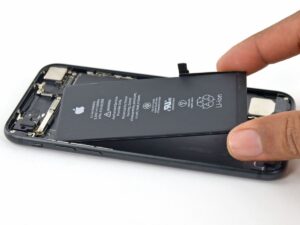
The Problem with Lithium-Ion: A 30-Year Bottleneck
To appreciate the magnitude of the 20-second charge, we must first understand why we’ve been stuck in the “slow lane” for so long. Lithium-ion batteries, which have powered everything from the first iPods to the latest electric SUVs, rely on intercalation—a process where lithium ions move physically through a liquid or gel electrolyte and wedge themselves into the molecular structure of an anode.
This process is inherently flawed for three reasons:
- Friction and Heat: Moving ions through a medium creates resistance. Resistance creates heat. If you try to force those ions in too fast (fast charging), the heat can lead to “thermal runaway”—the polite scientific term for your phone exploding.
- Physical Wear: Every time you charge and discharge a Li-ion battery, the physical structure of the materials expands and contracts. Over 500 to 1,000 cycles, the material starts to crack and degrade. This is why your two-year-old phone only lasts half as long as it did on day one.
- The Time Barrier: Even with “Ultra Fast” charging at 120W, you are still limited by the speed of chemical reactions. You can’t cheat chemistry.
The Supercapacitor Breakthrough: Physics Over Chemistry
Supercapacitors (or ultracapacitors) have existed for years, but they were always the “flash in the pan” of the energy world. They could release energy instantly (perfect for regenerative braking in buses) but they couldn’t hold much of it. They had high power density but terrible energy density.
The breakthrough that changed everything in late 2025 was the perfection of 2D Nanomaterials, specifically M-rGO (Multiscale Reduced Graphene Oxide) and MXenes. These materials are only a few atoms thick but possess a surface area that is mathematically staggering. One gram of this graphene-based material has a surface area equivalent to several basketball courts.
The Core-Shell Architecture
Engineers at the University of Central Florida and Monash University developed what is known as the “Core-Shell” nanowire structure. In this design, a highly conductive 1D nanowire (the core) allows electrons to travel at near-instantaneous speeds. This core is wrapped in a shell of 2D metal materials. This allows electrons to be “parked” on the surface of the shell in massive quantities without needing a chemical reaction.
When you plug your 2026-edition phone into a high-output GaN (Gallium Nitride) charger, the electrons don’t wait for a chemical invitation. They flood the surface of the nanomaterial instantly. It is the difference between filling a sponge with water (Battery) and covering a metal sheet with a thin layer of static electricity (Supercapacitor).
Comparing the Eras: Li-Ion vs. Supercapacitor
| Feature | Traditional Lithium-Ion | 2026 Nanotech Supercapacitor |
|---|---|---|
| Charging Speed | 60 – 120 Minutes | 10 – 20 Seconds |
| Cycle Life | ~1,000 Charges | 30,000+ Charges |
| Heat Generation | Significant (Requires Cooling) | Negligible |
| Weight | Heavy (Metal Oxides) | Ultra-light (Carbon-based) |
| Environmental Impact | High (Cobalt/Lithium Mining) | Low (Sustainable Carbon) |
Real-World Scenarios: How Your Life Changes
It’s easy to look at the “20-second” figure and think of it as a mere convenience. But the psychological and behavioral shifts are profound. When energy is instantaneous, the way we design our lives changes.
1. The “Departure Panic” Erased
We’ve all been there: You have to leave for the airport in 5 minutes, and you realize your phone is at 4%. In the Li-ion era, you’re doomed to a flight without entertainment or a frantic search for a terminal outlet. In the Supercapacitor era, you plug in while you’re putting on your shoes. By the time you’ve tied your laces, your phone is at 100%. The “anxiety” simply ceases to exist.
2. Public Infrastructure Reimagined
In cities like Tokyo, London, and New York, we are seeing the rise of “Charge-Pads” on subway handles and cafe tables. You don’t need to “sit and charge” for an hour. Simply placing your phone down while you order a coffee—a 30-second interaction—tops your device off for the rest of the day. Charging becomes a background task, like breathing.
3. The End of “Planned Obsolescence”
Because supercapacitors can be charged 30,000 times without losing capacity, the “battery life” will finally outlast the phone’s screen, camera, and processor. We are moving toward a decade-long device lifecycle, which is a massive win for consumer wallets and a blow to the “disposable tech” business model.
The “Catch”: Why Isn’t This in Every Phone Today?
If the tech is so superior, why are we still seeing Li-ion batteries in the latest flagship releases from some manufacturers? There are three remaining hurdles that the industry is clearing throughout 2026:
Energy Density vs. Volume
While supercapacitors have reached a point where they can power a phone for a full day, they are still slightly larger than an equivalent Li-ion battery. Early 2026 models are slightly thicker, or they utilize a “Hybrid” approach: a small Li-ion core for long-term standby and a massive supercapacitor for the 20-second “boost” functionality.
The Charging Brick Revolution
To push enough power into a device to charge it in 20 seconds, you need a serious charger. Your old 5W USB-A cube from 2015 cannot deliver the necessary current. The adoption of GaN (Gallium Nitride) chargers is the silent hero of this story. These chargers are small enough to fit in a pocket but powerful enough to jumpstart a car. Without the GaN revolution, the supercapacitor would be like a Ferrari stuck in a school zone.
Manufacturing Scale
Growing graphene and MXenes at a scale of billions of units is a different beast than making them in a lab. However, new Chemical Vapor Deposition (CVD) techniques have slashed the cost of graphene production by 90% in the last 18 months, making it economically viable for the $800+ smartphone market.
The Environmental Imperative
Beyond the convenience, there is a moral imperative for this technology. Lithium mining is a water-intensive process that often ravages ecosystems in South America. Cobalt mining has been plagued by human rights concerns in the DRC. Supercapacitors are primarily made of carbon—one of the most abundant elements on Earth. They are easier to recycle, non-toxic, and don’t require the stripping of the earth’s crust in the same invasive way.
Conclusion: The Instant Future
The 20-second charge is the final piece of the “Instant World” puzzle. We have instant communication, instant information, and instant commerce. By removing the 2-hour wait for energy, we are finally aligning our hardware with the speed of our digital lives.
As we look toward 2027, expect this technology to migrate from smartphones to laptops, power tools, and eventually, the electric vehicle in your driveway. The era of battery anxiety hasn’t just been solved; it’s been deleted from our collective memory.