
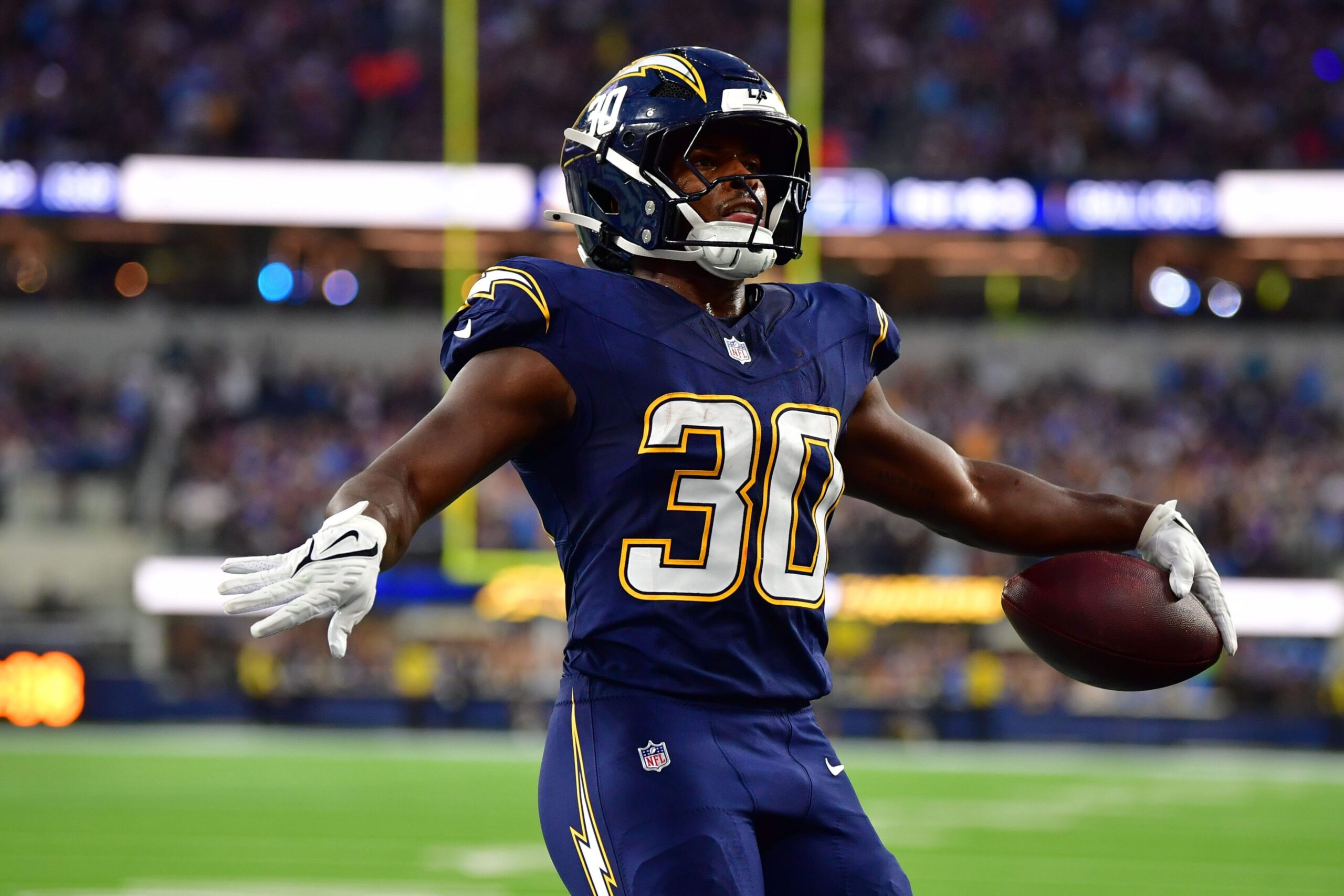
In the whirlwind of the NFL Draft, Day 3 selections often fly under the radar. But for astute teams, these rounds are where foundational depth and future stars can be found. For the Los Angeles Chargers, selecting Troy University’ all-time leading rusher, Kimani Vidal, with the 181st overall pick in the 2024 NFL Draft, was a strategic move aimed at injecting young, powerful talent into their offense. The subsequent signing of his rookie contract is the first formal step in his professional journey.
This article provides an exhaustive look at the Kimani Vidal contract with the Los Angeles Chargers. We’ll delve into the precise financial details, explain the structure of NFL rookie deals, analyze his fit within the team’s offensive scheme, and project what Chargers fans can expect from their new running back. Understanding the contract is key to understanding the team’s long-term vision and Vidal’s role within it.

Kimani Vidal Contract: The Essential Financial Breakdown
The NFL’s rookie wage scale, implemented in the 2011 Collective Bargaining Agreement (CBA), has eliminated much of the negotiation holdouts for draft picks outside of the first round. For a player like Kimani Vidal, selected in the sixth round, his contract is almost entirely pre-determined based on his draft slot.
The Los Angeles Chargers and Kimani Vidal formally agreed to terms on May 9, 2024, solidifying their partnership for the foreseeable future. Here is a detailed, projected breakdown of the financial commitment.
Contract Overview
-
Team: Los Angeles Chargers
-
Draft Position: Round 6, Pick 181 (2024 NFL Draft)
-
Contract Length: 4 Years
-
Total Value: Approximately $4,100,000
-
Signing Bonus: Approximately $173,000
Year-by-Year Salary Breakdown
The total value of the contract is distributed across the four years, consisting of a base salary and a prorated portion of the signing bonus. The following table outlines the projected annual earnings:
| Year | Base Salary | Signing Bonus Proration | Total Cap Hit |
|---|---|---|---|
| 2024 | $795,000 | ~$43,250 | ~$838,250 |
| 2025 | $960,000 | ~$43,250 | ~$1,003,250 |
| 2026 | $1,075,000 | ~$43,250 | ~$1,118,250 |
| 2027 | $1,190,000 | ~$43,250 | ~$1,233,250 |
Note: Cap hits are approximate. The specific structure can be adjusted slightly, but the total value remains fixed to the slot.
Understanding the Guarantees
A critical distinction between first-round and Day 3 contracts is the guarantee structure. Unlike the fully guaranteed deals of first-round picks, contracts for players selected in rounds 4-7 typically have only the signing bonus fully guaranteed.
For Kimani Vidal, this means:
-
Guaranteed Money: ~$173,000 (his signing bonus).
-
Non-Guaranteed Money: The remaining value of the contract, comprised of his base salaries from 2024 through 2027.
This structure is the definition of a “prove-it” deal. Vidal’s spot on the 53-man roster is not guaranteed year-to-year. If he were to be released before any of the league years, the Chargers would only be on the hook for the remaining prorated signing bonus, which would accelerate onto their current year’s salary cap as “dead money.” This minimal dead money makes the contract extremely team-friendly.
Also read : Why the Tetairoa McMillan Contract Might Be the Smartest First-Round Investment of the 2025 NFL Draft
The Strategic Fit: Vidal in the Chargers’ New-Look Offense
The financials tell one story, but the on-field fit tells another. The signing of Kimani Vidal is a quintessential “Jim Harbaugh and Joe Hortiz” move. The new General Manager and Head Coach duo have been clear about their intention to build a physical, relentless, and run-heavy offensive identity.
The “Harbaugh Ball” Philosophy
Jim Harbaugh’s offensive philosophy is rooted in a powerful ground game. He wants to control the line of scrimmage, wear down defenses, and create manageable passing situations for quarterback Justin Herbert. This requires a stable of capable, tough, and diverse running backs—not just one feature back.
The Chargers moved on from Austin Ekeler in the offseason and signed former Baltimore Raven Gus Edwards to be their early-down hammer. They also added J.K. Dobbins on a one-year “prove-it” deal, reuniting him with his former offensive coordinator, Greg Roman. This sets the stage for a competitive and physical training camp.
Where Kimani Vidal Fits In
Vidal enters this room not as a guaranteed starter, but as a compelling contender for carries. His collegiate profile is impressive:
-
Production: He left Troy as their all-time leading rusher with 4,010 yards and 33 touchdowns, demonstrating consistent high-level production.
-
Workhorse Build: At 5’8″ and 213 pounds, Vidal possesses a compact, powerful frame that allows him to run through arm tackles and maintain a low center of gravity. His 31 bench press reps at the Combine were tops among all running backs, highlighting his elite strength.
-
Contact Balance: His tape is filled with examples of breaking tackles and falling forward for extra yards, a trait highly valued in a Harbaugh-style offense.
His immediate role will likely be on special teams and as a depth piece in the running back rotation. However, his skill set makes him a direct backup to Gus Edwards as a between-the-tackles grinder. If he can impress in training camp and the preseason, he could carve out a role as a short-yardage and goal-line option, potentially even earning carries over more veteran players if he proves more effective.
The Path to the 53-Man Roster and Beyond
The signing of the contract is just the beginning. The real work for Kimani Vidal starts now.
The 2024 Training Camp Battle
The Chargers’ running back room is crowded. As of now, the presumed depth chart looks something like this:
-
Gus Edwards: The veteran leader and projected starter.
-
J.K. Dobbins: The high-upside wild card, if healthy.
-
Isaiah Spiller: A 2022 draft pick looking to secure his roster spot.
-
Kimani Vidal: The rookie, looking to prove his worth.
-
Other Depth/Special Teams Players (e.g., Elijah Dotson).
Vidal will be in a direct competition with Isaiah Spiller and others for what will likely be the third or fourth running back spot on the active roster. His ability to contribute on special teams—as a gunner on punt coverage or a returner—will be just as important as his running ability in securing that role.
Long-Term Outlook and Team Control
The true beauty of the Kimani Vidal contract, from the Chargers’ perspective, is the long-term team control. For four full seasons, the Chargers have a potential impact player at the league’s most physically demanding position on a cost-controlled deal.
Consider the financial context:
-
The average salary for a veteran backup running back is often several million dollars per year.
-
Vidal’s cap hit never exceeds $1.24 million.
If he develops into a reliable rotational piece or even a starter by year three or four, he would provide monumental value. This allows the team to allocate salary cap resources to other premium positions like quarterback, wide receiver, and pass rusher.
Frequently Asked Questions (FAQs)
1. Is Kimani Vidal’s contract fully guaranteed?
No. Only his signing bonus of approximately $173,000 is fully guaranteed. His base salaries for 2024-2027 are not guaranteed, meaning he must earn his roster spot each year to receive that money.
2. What happens if the Chargers cut Kimani Vidal?
If the Chargers were to release Vidal before the season, they would incur a “dead money” charge of his remaining signing bonus proration (~$173,000 in 2024) but would be relieved of his future base salaries. As the years go on, the dead money charge decreases, making it even easier for the team to move on if he doesn’t pan out.
3. How does Vidal’s contract compare to other Chargers running backs?
-
Gus Edwards: Signed a 2-year, $6.5 million deal with $3.7 million guaranteed.
-
J.K. Dobbins: Signed a 1-year, “prove-it” deal worth up to $3.5 million, but with a low base salary and plenty of incentives.
-
Kimani Vidal: On a 4-year, $4.1 million deal with only ~$173k guaranteed.
Vidal is by far the most cost-effective option for the next four years.
4. Can the Chargers extend Vidal’s contract before it expires?
Yes, but not until after his third season. According to the CBA, teams cannot begin negotiations on a contract extension until after the conclusion of a player’s third regular season. If Vidal outperforms his contract, an extension could be discussed following the 2026 season.
5. What is Kimani Vidal’s biggest challenge in making the team?
Staying healthy and adapting to the speed of the NFL are universal challenges. Specifically for Vidal, his biggest hurdle will be proving his value on special teams and demonstrating his ability in pass protection—a critical skill for any young running back hoping to see the field on third downs.
Conclusion: A Low-Risk, High-Reward Investment
The Kimani Vidal contract is a masterclass in NFL team-building economics. The Los Angeles Chargers have invested a minimal amount of guaranteed capital to secure the rights to a highly productive, powerful college running back for the next four years. The financial risk is virtually nonexistent, while the potential reward is a starting-caliber player contributing on a bargain-bin salary.
For Kimani Vidal, the contract is his foot in the door. It’s his opportunity to prove that his record-breaking career at Troy was no fluke and that he belongs in the National Football League. In a Chargers offense that promises to be more physical and run-oriented than ever before, his skill set could not be more perfectly aligned.
While the headlines will understandably be dominated by the massive contracts of stars like Justin Herbert and Khalil Mack, it’s shrewd, value-based moves like the drafting and signing of Kimani Vidal that often build the backbone of a championship-contending roster. All eyes will now be on Costa Mesa this summer to see if this sixth-round investment can pay immediate and lasting dividends for the Bolts.