
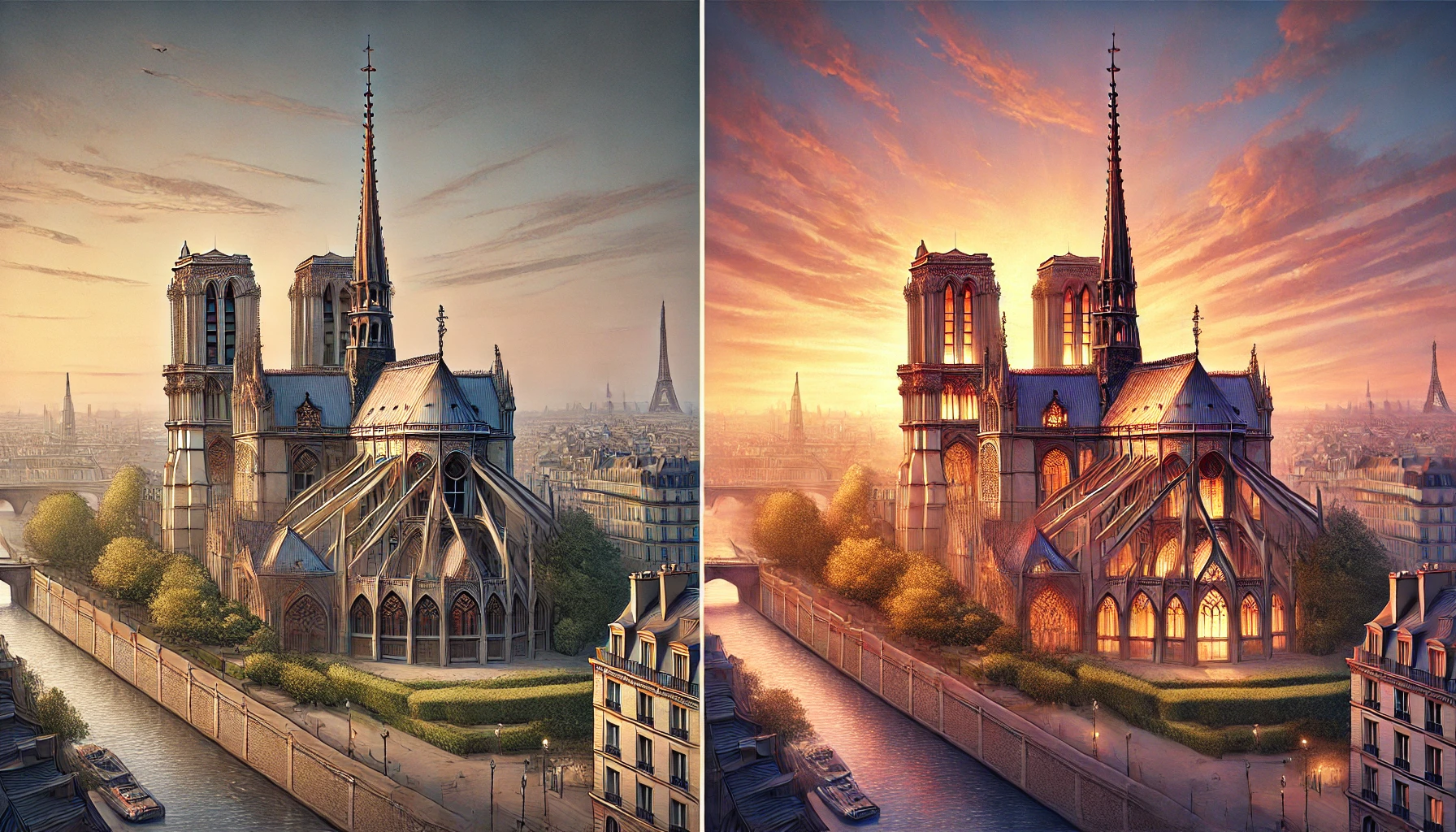
Notre Dame Cathedral stands as one of the most iconic landmarks in Paris and a symbol of Gothic architecture’s enduring beauty. This extraordinary structure has witnessed centuries of history, serving as a cultural, spiritual, and artistic beacon for people around the world.
From its historic grandeur to the tragic 2019 fire and its ongoing restoration efforts, the story of Notre Dame is a testament to resilience and a global commitment to preserving heritage. This article delves into the fascinating journey of Notre Dame before and after its transformation, shedding light on its rich history, devastating losses, and the meticulous efforts to restore it to its former glory.
May be you like : 10 Unforgettable Places To Visit In San Antonio

dearis.eu.org/AI generated images
Notre Dame Before the Fire
A Timeless Architectural Marvel
Constructed over nearly two centuries starting in the 12th century, Notre Dame Cathedral became a defining example of Gothic architecture. Its towering spires, intricate rose windows, and revolutionary flying buttresses were groundbreaking achievements of their time.
The cathedral’s design seamlessly blended functionality with artistry, creating a space that was both structurally innovative and visually captivating. Notre Dame’s iconic façade, adorned with sculptures and gargoyles, conveyed religious narratives and symbolized divine protection. For centuries, it stood not only as a marvel of medieval engineering but also as a sanctuary that invited pilgrims, worshippers, and architects from across the globe.
Cultural and Historical Significance
Notre Dame was more than just a building; it was a living piece of history intertwined with the cultural and spiritual identity of France. It witnessed monumental events, from royal coronations to the liberation of Paris during World War II.
Its cultural legacy was cemented by Victor Hugo’s 1831 novel, The Hunchback of Notre-Dame, which drew global attention to the cathedral’s architectural beauty and the need for its preservation. The novel’s success also spurred the 19th-century restoration led by Eugène Viollet-le-Duc. Notre Dame became a symbol of national pride and an irreplaceable cultural treasure that connected the past with the present.
Tourism and Conservation Challenges
In the years leading up to the fire, Notre Dame faced increasing pressure from its popularity as one of the most visited landmarks in the world. Hosting nearly 13 million visitors annually, the cathedral was strained by foot traffic, environmental wear, and aging materials.
Conservation efforts were often hindered by limited funding and debates over modernization versus preservation. These challenges underscored the need for a comprehensive restoration plan, but the devastating fire forced an urgent reevaluation of these priorities.
The Devastating Fire of 2019
Timeline of the Disaster
On April 15, 2019, the world watched in horror as a fire broke out beneath Notre Dame’s roof. What began as a routine evening at the cathedral quickly turned into a global tragedy as flames consumed the wooden framework, known as “the forest,” which dated back to the medieval era.
Firefighters battled the blaze through the night, saving much of the cathedral’s structure and its treasured relics, but the iconic spire collapsed, leaving behind an indelible scar on the Parisian skyline.
Extent of the Damage
The fire inflicted severe damage on Notre Dame, destroying its roof and spire while compromising parts of its vaulted ceiling. The interior was spared total destruction, thanks to swift firefighting efforts, but the fragile state of the remaining structure required immediate stabilization. The loss extended beyond physical damage; the cathedral’s artifacts, art, and religious relics faced varying degrees of harm, though many were heroically saved by rescue teams.
Emotional and Cultural Impact
The fire was a profound moment of mourning for the people of France and millions worldwide. Notre Dame was not just a landmark; it was a shared cultural and spiritual heritage.
Images of the burning cathedral evoked a sense of collective loss, and the global community responded with an unprecedented outpouring of solidarity. Governments, organizations, and individuals pledged billions of euros to support the restoration, reflecting the deep emotional connection people felt toward Notre Dame.
The Restoration Journey
Immediate Stabilization Efforts
In the days following the fire, engineers and architects worked tirelessly to stabilize Notre Dame’s weakened structure. Emergency measures included installing temporary supports to prevent the walls and vaults from collapsing.
Experts carefully removed debris while preserving salvageable materials to be reused in the restoration process. These efforts laid the foundation for the cathedral’s revival while safeguarding its remaining elements.
Restoration Goals and Controversies
The restoration sparked a global debate about the future of Notre Dame. Some advocated for a modern reinterpretation that would incorporate contemporary design elements, while others insisted on faithfully replicating its original Gothic features.
Ultimately, the decision was made to restore the cathedral as closely as possible to its pre-fire state, maintaining its historical integrity. This approach honors Notre Dame’s legacy while addressing the need for modern safety measures.
Progress So Far
Since the fire, significant progress has been made in rebuilding Notre Dame. Craftspeople from around the world have contributed their expertise, employing techniques that replicate the craftsmanship of the Middle Ages.
The spire, originally designed by Viollet-le-Duc in the 19th century, is being reconstructed with meticulous attention to detail. The roof is being rebuilt using fire-resistant materials, ensuring greater resilience against potential future disasters. The restoration is on track for completion by December 2024, a milestone eagerly anticipated by millions.
Notre Dame Today: Before and After the Restoration
A Table of Key Changes
| Feature | Before the Fire | After the Restoration |
|---|---|---|
| Roof | Original wooden structure | Modern fire-resistant materials |
| Spire | Historic design by Viollet-le-Duc | Faithful replica under construction |
| Stained Glass Windows | Original Gothic designs | Restored and cleaned |
| Visitor Access | Limited due to conservation efforts | Anticipated enhanced visitor experience |
Renewed Role in Culture and Tourism
When the restoration is completed, Notre Dame will stand as a testament to resilience and a symbol of global unity. It is expected to once again attract millions of visitors, offering them a chance to witness its magnificence.
The renewed spaces will enhance the visitor experience, blending restored history with state-of-the-art safety features. The cathedral’s spiritual and cultural role will be revitalized, ensuring its place as a beacon of inspiration for future generations.
Lessons from Notre Dame’s Journey
Preserving Cultural Heritage
Notre Dame’s story highlights the challenges and rewards of preserving cultural landmarks. It underscores the importance of proactive conservation efforts to protect these treasures from the ravages of time and unforeseen disasters.
Innovations in Restoration
The restoration process demonstrates how modern techniques can complement traditional craftsmanship. By combining historical fidelity with contemporary materials, Notre Dame’s restoration sets a new standard for heritage preservation.
Environmental Considerations
The fire has prompted discussions about the role of climate change in the preservation of historic sites. Future efforts must account for environmental factors, ensuring that iconic landmarks like Notre Dame remain safeguarded for generations to come.
The story of Notre Dame before and after its restoration is a testament to human ingenuity, perseverance, and the enduring power of cultural heritage. From its medieval origins to its modern revival, Notre Dame continues to inspire and unite people across the globe.
As it prepares to reopen, the cathedral is poised to embark on a new chapter, embodying resilience, faith, and the timeless spirit of Paris. Notre Dame’s journey reminds us all of the value of preserving our shared history and the collective effort it takes to do so.