
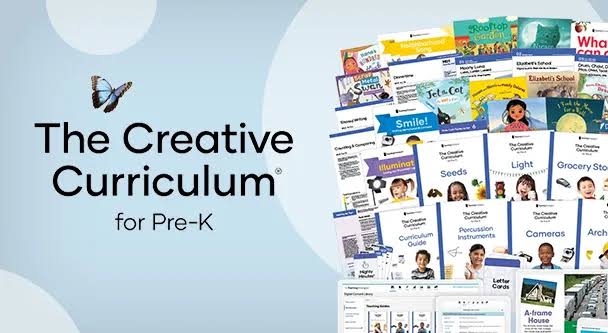
Understanding The Creative Curriculum
The Creative Curriculum is an evidence-based educational framework designed to support the holistic development of young children. Unlike traditional teaching that relies heavily on memorization, this curriculum encourages learning through exploration, play, and discovery. Its approach is grounded in modern research in cognitive and developmental psychology, which shows that children learn best when actively engaged.
Teachers act as guides and facilitators, helping children navigate hands-on activities that build creativity, curiosity, and independent thinking. This method is widely used in preschools, kindergartens, and early learning centers.
Read too : From Lego to Logic: Why Play is the Brain’s Best Teacher for Brilliant Thinkers
Learn more: The Creative Curriculum Official Website
Core Principles of The Creative Curriculum
The curriculum rests on five key principles:
- Child-Centered Learning: Children follow their interests, making learning meaningful.
- Integrated Studies: Combines subjects like math, literacy, science, and social studies in thematic units.
- Active Engagement: Learning occurs through projects, experiments, and imaginative play.
- Teacher as Guide: Educators observe, question, and support learning rather than direct it.
- Ongoing Assessment: Teachers track progress through observation and documentation, providing tailored support.
Click for details: Teachstone Resources
How The Creative Curriculum Shapes Thinking Skills
Encouraging Critical Thinking
Activities such as problem-solving games, group challenges, and storytelling help children analyze, question, and find solutions. This strengthens cognitive flexibility and prepares children for complex reasoning later in life.
Fostering Creativity
The curriculum emphasizes art, music, and imaginative play, helping children explore new ideas. Role-playing, building projects, and creative storytelling boost cognitive flexibility and innovative thinking. Studies show early creative experiences positively impact long-term academic performance.
Study Reference: Early Childhood Creativity Research – NAEYC
Enhancing Social-Emotional Skills
Children develop social-emotional skills through collaboration, communication, and empathy-building activities. Group projects and peer interactions foster teamwork, negotiation, and leadership skills critical for future success.
Implementing The Creative Curriculum in Classrooms
| Component | Description |
|---|---|
| Learning Centers | Dedicated areas for reading, art, science, and dramatic play |
| Thematic Units | Interdisciplinary topics like “Community Helpers” or “The Five Senses” |
| Assessment Tools | Portfolios, checklists, and anecdotal records to track child progress |
| Family Engagement | Activities and workshops to involve parents in learning |
| Technology Integration | Age-appropriate digital tools to enhance exploration and understanding |
Teachers adapt materials and activities to meet the needs of individual children, ensuring personalized learning experiences that keep students engaged.
Benefits Backed by Research
The Creative Curriculum has proven advantages:
- Improved Cognitive Skills: Children show advanced problem-solving and reasoning abilities.
- Language Development: Enhanced vocabulary and communication skills compared to traditional programs.
- Increased Engagement: Hands-on, thematic learning maintains interest and motivation.
- Academic Readiness: Early exposure to inquiry-based learning correlates with stronger elementary school performance.
Research Reference: NAEYC – Benefits of Creative Curriculum
Real-World Examples of Success
- Preschools: Schools report higher engagement and fewer behavioral issues in classrooms using the curriculum.
- Kindergarten Readiness: Children show stronger literacy and numeracy skills when entering formal school.
- Special Needs Inclusion: Flexible strategies support children with diverse learning needs.
Case Study: Creative Curriculum in Action – Scholarly Review
Challenges and Considerations
Despite its effectiveness, implementing The Creative Curriculum can have challenges:
- Teacher Training: Educators need ongoing professional development.
- Resource Demands: Hands-on, thematic materials can be costly.
- Assessment Balance: Standardized tests may not fully capture progress in inquiry-based programs.
Tip: Combining The Creative Curriculum with traditional methods can maximize benefits while addressing challenges.
The Future of Early Education with The Creative Curriculum
The Creative Curriculum represents a shift toward personalized, inquiry-based learning. Its focus on creativity, critical thinking, and social-emotional skills aligns with 21st-century demands. Children trained under this curriculum are better prepared for academic challenges, real-world problem-solving, teamwork, and innovation.
Further Reading: Education Week – Innovative Curricula