

An In-Depth Editorial on the Industrialization of the Human Mind in the Age of Artificial Intelligence
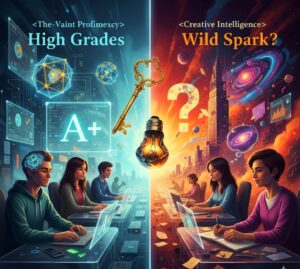
The Efficiency of the Machine: Why AI Tutors Work
To understand why AI tutors have been so successful in raising grades, we must look at the mechanics of learning. Traditionally, education was a game of “catch-all” instruction. A teacher would deliver a lecture, and if a student’s mind wandered for even sixty seconds, a foundational block of knowledge was lost, potentially crippling their understanding for years.
AI tutors utilize Adaptive Learning Scaffolding. This technology identifies exactly where a student’s knowledge base is “leaky” and plugs the holes in real-time. This is often referred to as “The Bloom Effect,” named after educational psychologist Benjamin Bloom, who posited that a student receiving 1:1 tutoring performs two standard deviations better than a student in a traditional classroom.
The Pillars of Algorithmic Success:
- Hyper-Granular Diagnostics: AI identifies not just *that* a student got a question wrong, but *why*—distinguishing between a conceptual misunderstanding and a simple clerical error.
- The Absence of Social Shame: For many students, the greatest barrier to learning is the fear of looking “stupid” in front of peers. An AI tutor provides a judgment-free sanctuary for failure.
- Continuous Engagement: Gamification algorithms ensure that the difficulty level is always in the “Goldilocks Zone”—not so hard that the student gives up, and not so easy that they become bored.
The Cognitive Cost of Convenience
While the benefits are clear, the “GPS-ification” of education introduces a dangerous side effect: Cognitive Atrophy. Just as our ability to read maps withered with the advent of turn-by-turn navigation, our ability to engage in “Productive Struggle” is being eroded by tutors that offer hints at the first sign of hesitation.
The Erosion of the Productive Struggle
Neuroscience tells us that the most profound learning happens when the brain is slightly uncomfortable. This state of “desirable difficulty” forces the brain to build new neural pathways. By providing immediate, frictionless paths to the correct answer, AI tutors may be keeping the brain in a state of superficial processing. We are building “fast-twitch” test-takers who lack the “slow-burn” endurance required for deep, original synthesis.
“We are creating a generation of students who can solve any problem they are given, but cannot decide which problems are worth solving.”
The Standardized Mind: How Large Language Models Flatten Creativity
The core of the problem lies in the training data of the AI themselves. Large Language Models (LLMs) function on probabilistic prediction. They are designed to suggest the most *likely* next word or the most *standard* solution based on a vast corpus of existing human knowledge.
The Linguistic Mean
When a student collaborates with an AI to write an essay, the AI naturally nudges the prose toward a polished, professional, but ultimately “average” middle ground. The radical, the avant-garde, and the bizarre are smoothed over. Over time, the student’s internal voice begins to mirror the AI’s neutral tone. This is “Linguistic Flattening,” and it is the antithesis of creative expression.
| Attribute | The AI-Assisted Student | The Divergent Thinker |
|---|---|---|
| Goal | Accuracy and Optimization | Discovery and Expression |
| Method | Path of Least Resistance | Trial, Error, and Intuition |
| Outcome | High Standardized Success | High Variance / Novelty |
| Risk | Homogenization of Thought | Failure and Inefficiency |
The Economic Implications: Who Wins in a World of AI Grades?
In the labor market of the 2030s, the “Grade” will likely matter less than ever before. If every student has an AI that can help them achieve an ‘A’, then the ‘A’ becomes a commodity. What will become the new currency of the elite?
The answer is Human Differentiation. If the AI can handle the logic, the math, and the standard prose, the only remaining value for a human worker is the ability to connect disparate ideas in ways an algorithm wouldn’t think of. Paradoxically, by using AI to boost our children’s grades, we may be making them *less* valuable in a future economy that prizes original thought above all else.
Rethinking the Role of the AI Tutor: From Pilot to Co-Pilot
To avoid a “Creativity Winter,” we must shift the design philosophy of educational technology. We need “Friction-Integrated AI.” Instead of being a tool that solves problems, the AI must become a tool that complicates them.
1. Implementing Divergent Prompting
Rather than guiding a student toward the “right” answer, future AI tutors should be programmed to play Devil’s Advocate. If a student provides a standard answer, the AI should ask: “Why might a person from a completely different culture find this answer offensive?” or “How would this problem change if the laws of physics were inverted?”
2. The “Dark Mode” of Learning
Educational software should include “Analog Windows”—mandatory periods where the AI shuts off and forces the student to use physical tools, handwritten notes, and unassisted brainstorming. This preserves the tactile, messy reality of human thought.
Conclusion: Saving the Spark
We stand at a crossroads. One path leads to a world of perfectly optimized students—efficient, knowledgeable, and entirely predictable. The other path is more difficult: it requires us to accept lower average scores in exchange for higher peaks of individual genius. It requires us to value the “unproductive” hour spent staring at a wall more than the “productive” hour spent checking off AI-generated tasks.
The AI-powered tutor is a magnificent tool, perhaps the greatest we have ever built for the dissemination of knowledge. But we must remember that knowledge is not wisdom, and proficiency is not creativity. If we want to raise a generation capable of solving the existential threats of the 21st century, we must ensure that while the AI sharpens their minds, it does not extinguish the spark that makes them human.