
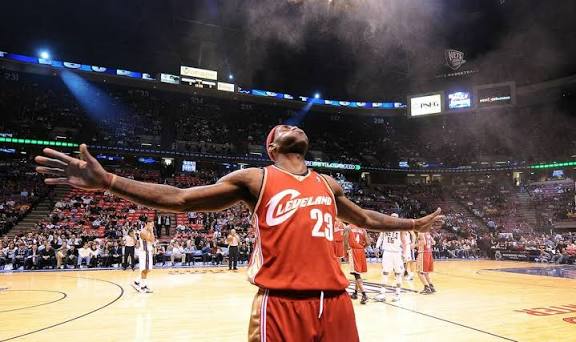
It’s moments before the biggest game of their life. The roar of the crowd is a distant hum. In the locker room, however, there’s a different kind of energy. You won’t find frantic last-minute advice or chaotic shouts. Instead, you’ll see a scene of intense, personalized focus. Each athlete is in their own world, headphones on, eyes closed, mentally traversing the landscape of the battle to come.
This is not mere superstition. This is a finely tuned, non-negotiable pre-game ritual.
For decades, we’ve witnessed this scene without fully understanding its profound power. We saw it as a simple quirk of athletes. But now, science and sports psychology have revealed the truth: the modern pre-game ritual, increasingly centered on a personalized music playlist, has become the most powerful and consistent tool behind the mindset of every champion.
This article delves into the neuroscience and psychology of this critical practice. We will explore how a deliberate pre-game ritual transforms anxiety into focus, doubt into confidence, and a group of individuals into a unified team poised for victory.

Beyond Superstition: The Science of the Pre-Game Ritual
At its core, a pre-game ritual is a sequence of deliberate, repetitive actions and mental exercises performed before competition. Its purpose is to create a state of optimal arousal and focus, known in sports psychology as the “Flow State” or “the Zone.”
Why does this work? The human brain craves predictability in the face of uncertainty. A high-stakes game is a cauldron of unpredictability. The pre-game ritual acts as an anchor, providing a sense of control and stability. It signals to the brain and body: “It is time to perform.”
When an athlete engages in the same focused routine before every game, they are essentially creating a neural pathway. This pathway, reinforced through repetition, leads directly to a state of peak readiness. It’s a psychological trigger that bypasses conscious thought and taps directly into trained physical responses.
But while rituals like specific stretching sequences or visualization are powerful, one element has emerged as the universal catalyst: music.
Read too : Athlete Longevity: Why the Shortest Athletes Often Have the Longest Careers
The Soundtrack of Success: How Music Supercharges the Ritual
Music is not just background noise; it is a potent neurological tool. When integrated into a pre-game ritual, it becomes the engine that drives the psychological transformation. Here’s how:
1. Neurological Priming: Rewiring the Brain for Performance
When you listen to music you connect with, your brain releases dopamine—the neurotransmitter associated with pleasure and reward. This immediate biochemical shift elevates mood and creates a positive associative framework for the task ahead.
Furthermore, music with a strong, steady beat can synchronize with the brainwaves and heart rate of the listener. This process, known as entrainment, can physically alter an athlete’s physiological state. A fast tempo (e.g., 120-140 BPM) can increase heart rate and arousal, priming the body for explosive action. In contrast, a slower tempo can lower cortisol (the stress hormone) and steady the nerves, perfect for sports requiring fine motor skills or intense concentration.
2. Emotional Regulation: From Anxiety to Unshakeable Confidence
Pre-game anxiety is a universal experience. The key for champions is not to eliminate it, but to harness it. Music is a direct conduit to our emotional center, the amygdala.
An athlete feeling sluggish might use high-energy, aggressive music from artists like Eminem or Metallica to incite anger and intensity. As legendary basketball coach Phil Jackson often noted, some of his players used music to cultivate a “controlled rage.”
Conversely, an athlete overwhelmed by nerves might use a soaring, inspirational orchestral piece or a familiar, comforting song to calm their mind and build a foundation of quiet confidence. This emotional regulation is the cornerstone of a resilient champion mindset.
3. Cognitive Focus: Building a Mental Fortress
The locker room can be a distracting environment. Music, especially when delivered through noise-canceling headphones, creates an auditory cocoon. It blocks out irrelevant chatter, media noise, and the intimidating presence of opponents.
This auditory barrier allows the athlete to turn inward. They are not just listening to music; they are using it as a soundtrack for their mental visualization. They see themselves making the perfect pass, landing the winning shot, or executing a flawless technique. This combination of music and visualization makes the pre-game ritual exponentially more effective, solidifying the neural patterns for success before a single physical move is made.
4. Identity and Tribe: The Shared Ritual
While often personal, the pre-game ritual can also be a powerful tool for team cohesion. The team playlist blasting in the locker room or on the bus ride over is a collective experience. It builds a shared emotional state and reinforces a sense of shared identity and purpose.
When the bass drops and a unifying anthem plays, it synchronizes the team’s energy. It’s a non-verbal communication that says, “We are one, and we are ready.” This transforms a group of talented individuals into a single, formidable unit.
Inside the Locker Room: The Rituals of the Greats
The theory comes to life in the habits of the world’s most elite competitors. Their pre-game ritual is as meticulously crafted as their physical training.
Michael Phelps: The most decorated Olympian of all time had an unmistakable pre-game ritual. Before every race, he would sit alone, headphones on, listening to rap music. His signature move was the slow, rhythmic shoulder roll. The music helped him enter a state of intense, almost intimidating focus, visualizing his race from start to finish, leaving no room for doubt or external distraction.
Serena Williams: Tennis legend Serena Williams is known for her powerful and focused pre-game ritual. She has spoken about listening to a mix of hip-hop and pop to get into a “zone.” Her routine includes specific visualization and dance-like movements on her way to the court, using the music’s energy to project confidence and dominance before the first serve is even struck.
LeBron James: For LeBron James, the ritual starts long before tip-off. He is famously meticulous about his routine, which always includes a curated playlist. He uses music to modulate his energy throughout the day—perhaps something lighter in the morning and more intense, aggressive tracks as game time approaches. This layered use of music ensures he peaks at exactly the right moment.
The All Blacks: New Zealand’s legendary rugby team presents a masterclass in collective ritual. Their performance of the “Haka” before a match is one of the most iconic pre-game rituals in all of sports. It is a synchronized, thunderous display of unity, strength, and identity. While not set to a modern playlist, the Haka serves the exact same purpose: it emotionally primes the team, intimidates the opposition, and signals a transition into a state of war.
Building Your Own Championship Pre-Game Ritual
You don’t need to be an Olympic athlete to benefit from this practice. Whether you’re preparing for a crucial business presentation, a difficult conversation, a creative project, or your own athletic pursuit, you can build a powerful pre-game ritual. Here’s how:
Step 1: Audit Your Emotional State
Before you can design your ritual, you must be honest about your default state. Do you tend toward lethargy or anxiety before a high-pressure event? Your answer will determine the goal of your ritual.
Step 2: Curate Your “Prime” and “Focus” Playlists
Create two distinct playlists:
-
The “Prime” Playlist: This is for general arousal. Use it an hour or two before you need to perform. It should feature songs that elevate your mood, make you feel powerful, and connect you to your “why.”
-
The “Focus” Playlist: This is the core of your ritual, used in the 15-30 minutes immediately before you begin. The songs should be familiar, have a consistent tempo that matches your desired heart rate, and contain minimal lyrical distractions. This list is for deep focus and visualization.
Step 3: Sequence Your Actions
A ritual is more than music. Combine it with deliberate actions:
-
Gear Up (5 mins): Put on your headphones. This physical act is a powerful trigger that the ritual has begun.
-
Listen and Breathe (10 mins): Start your “Focus” playlist. Close your eyes and sync your deep, diaphragmatic breathing with the beat of the music.
-
Visualize Success (10 mins): With the music as your backdrop, mentally run through your performance. See yourself succeeding in vivid, positive detail. Feel the emotions of a win.
-
The Trigger Move (1 min): Have a single, simple physical action to end the ritual—a fist pump, a specific stretch, tapping the doorframe. This signals the transition from preparation to performance.
Step 4: Consistency is King
The magic is in the repetition. Perform your pre-game ritual exactly the same way before every important event. The neural pathways will strengthen, making the trigger into a state of focus faster and more automatic each time.
The Final Whistle: More Than Just Beats
The image of an athlete with headphones on is not one of isolation, but of intentional preparation. It is the modern manifestation of an ancient practice—the sacred pre-game ritual.
It demonstrates a profound understanding that the battle is first won in the mind. By leveraging the scientific power of music to regulate emotion, sharpen focus, and build confidence, champions construct a psychological fortress from which they can perform at their peak.
The next time you face your own high-stakes moment, remember the lesson from the world’s greatest competitors. Don’t just walk into the arena. Build your ritual, press play, and step onto your court with the unshakeable focus of a champion. Your pre-game ritual is the key that unlocks the door to your best performance.
FAQ Section
Q1: What is the ideal length for a pre-game ritual?
A: The sweet spot is typically between 15-45 minutes. It should be long enough to fully transition your mental state but not so long that it becomes draining or leads to overthinking.
Q2: Can the same pre-game ritual work for a team and an individual?
A: Yes, but it often has two layers. Individuals will have their personal ritual (e.g., with headphones), which can then be followed by a brief, shared team ritual (e.g., a specific chant or huddle) to synchronize group energy.
Q3: I get bored with the same playlist. Should I change it?
A: Familiarity is key for triggering the conditioned response. It’s better to have a core set of 5-10 “anchor” songs that never change and reside at the heart of your ritual. You can experiment with adding new songs to the periphery of your playlist, but keep the core consistent.
Q4: Is there a specific genre of music that is best for a pre-game ritual?
A: No. The “best” music is entirely subjective and should be whatever reliably elicits the specific emotional and physiological state you need to perform. For some, that’s classical; for others, it’s heavy metal. The effectiveness is personal.