
Life360, once celebrated as a family-safety and location-sharing app, now finds itself at the center of major legal and security storm. With mounting lawsuits alleging serious privacy violations and design flaws, many are asking: Why is Life360 getting sued? This article dives deep into the issues — from data selling to tracker vulnerabilities — and what it means for users, regulators, and the company itself.

1. Understanding Life360: What It Is & How It Works
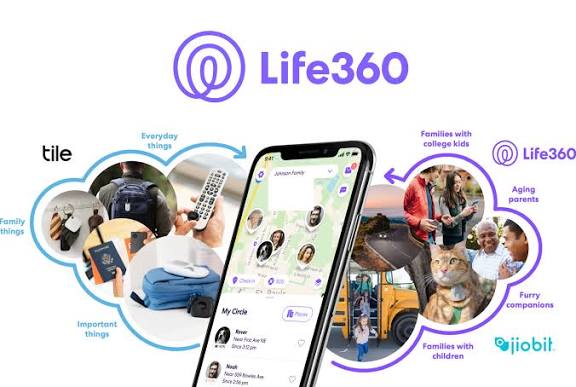
Founded as a family-oriented GPS tracking application, Life360 allows users (typically family members) to share real-time locations, set “Places” (e.g., Home, School), and receive alerts when someone arrives or leaves. Over time, Life360’s growth extended beyond the app: in 2021, it acquired Tile, a maker of small Bluetooth tracking devices used to locate keys, bags, and wallets.
On the surface, Life360 markets itself as a tool for safety and connectivity. But under the hood, its business model — particularly how it handles and monetizes location data — has raised red flags.
2. Why Is Life360 Getting Sued? Key Legal & Privacy Allegations
Life360 is facing multiple lawsuits for two main pillars of concern:
- Selling user location data to third parties, and
- Design and security flaws in Tile trackers that allegedly enable stalking.
Let’s break down both.
2.1. Data Privacy Lawsuit: Selling Precise Location Data
One of the most prominent lawsuits accuses Life360 of secretly selling highly precise user geolocation data to data brokers — without adequate user consent.
2.1.1. The Class-Action Lawsuit
- In January 2023, a class-action complaint (E.S. v. Life360 Inc) was filed in Northern California.
- The plaintiffs claimed Life360 shares detailed location data with data brokers like X-Mode, SafeGraph, Cuebiq, and Arity, which then resell it to advertisers, insurers, and other entities.
- According to the lawsuit, some of the sold data is precise enough to link an individual’s mobile device to sensitive locations — for example, reproductive health clinics, places of worship, or shelters.
- The plaintiffs argued that Life360 misled users via its privacy policy: although it claimed to anonymize data to avoid directly identifying users, the data’s granularity allegedly still allowed re-identification.
- The lawsuit also charged Life360 with unfair business practices, negligence, and unjust enrichment — asserting that the company profited from its users’ private location data while downplaying how that data is used.
2.1.2. Outcome and Response
- On November 3, 2023, the class-action lawsuit was voluntarily dismissed with prejudice, meaning the same complaint cannot be refiled.
- While the case ended, it brought to light serious concerns: how Life360 describes its data practices, what users are actually consenting to, and the real risk of de-anonymization.
- In response to media coverage, Life360’s CEO defended their business model, saying monetizing location data enables the core Life360 service to remain free for many users.
- The company claims to de-identify data before sharing, by removing email, username, and other directly identifying information.
2.2. Security & Stalking Lawsuit: Tile Trackers Under Fire
Beyond data selling, Life360 is also being sued over Tile trackers — small Bluetooth-enabled devices used to locate personal items. Critics and plaintiffs argue these devices are vulnerable to misuse, especially for stalking.
2.2.1. The Ireland-Gordy Case
- A high-profile lawsuit, Ireland-Gordy et al. v. Tile, Inc.; Life360, Inc.; Amazon.com, Inc., was filed by multiple plaintiffs alleging they were stalked using hidden Tile trackers.
- In their complaint, plaintiffs argued that Tile had been warned about stalking misuse but failed to implement effective protections.
- They claimed common-sense security safeguards — like stronger anti-stalking alerts or detection mechanisms — were missing or weak.
- On August 6, 2025, a U.S. federal judge ordered a stay on many of the remaining claims, citing overlapping arbitration or appeal issues.
- Some prior claims were dismissed as time-barred, meaning they were filed after the statute of limitations expired.
2.2.2. Technical & Design Vulnerabilities
Security researchers — notably from Georgia Tech — have uncovered serious design flaws in Tile’s Bluetooth protocol:
- Unencrypted MAC Address: Each Tile broadcasts a static (non-rotating) MAC address over Bluetooth.
- Unique ID Broadcast: Alongside the MAC address, the unique device ID is also sent unencrypted.
- Predictable ID Rotation: While Tile rotates its unique ID, researchers found the rotation algorithm weak — an attacker could predict future IDs after capturing one.
- Server Storage: Location, MAC address, and ID are allegedly transmitted to Tile’s servers without encryption (cleartext), giving Tile (and potentially others) persistent insight into the tag’s location.
- Replay Attack: Researchers demonstrated that a tracker’s Bluetooth signal can be recorded and later replayed elsewhere — making it look like the victim’s Tile is somewhere it isn’t, potentially framing them.
- Anti-Theft Mode Problem: Tile’s “Anti-Theft Mode” hides the tracker from other Tile users’ scans (e.g., “Scan & Secure” feature). While it’s designed to protect against theft, it can also render the tag undetectable by people who suspect they’re being tracked.
- Accountability Mechanism Weakness: Tile requires ID verification and agreement to a fine (reportedly $1 million) to activate Anti-Theft Mode, but researchers argue the accountability system is subvertible.
2.2.3. Broader Security Implications
- The Electronic Frontier Foundation (EFF) warns that Tile’s lack of encryption and static identifiers make its devices dangerous — and could facilitate mass surveillance.
- According to EFF, competitors like Apple, Google, and Samsung have adopted stronger standards: rotating MAC addresses, encrypted broadcasts, and better alert systems.
- Researchers point out that many of Tile’s anti-stalking features rely on manual scans. For example, the user must actively initiate “Scan & Secure” to look for unknown trackers — there’s no consistent background scan.
- Moreover, the design trade-off — prioritizing anti-theft over anti-stalking — may leave victims exposed.
2.2.4. Life360’s Response
- Life360 acknowledges the reported issues. According to their statements, they “made a number of improvements” after researchers disclosed the vulnerabilities.
- The company also emphasizes that using Tile for non-consensual tracking violates its Terms of Service, and that it collaborates with law enforcement in suspected misuse cases.
- Life360 participates in HackerOne, a bug-bounty platform, to encourage ethical disclosure of security issues.
3. Why the Lawsuits Are Significant: The Bigger Picture
The lawsuits against Life360 reflect broader tensions and risks in the digital age:
3.1. Privacy vs. Business Model
- Life360’s monetization of location data shows how “safety” apps can both protect and exploit. While many users adopt it for family safety, others may not fully realize their data is being sold.
- The dismissal of the class-action suit doesn’t eliminate the ethical questions: how transparent should data-collecting apps be, and how much control should users retain over their movements?
3.2. Design Accountability in IoT Devices
- The Tile tracker lawsuits highlight that hardware design matters. Devices meant for finding keys or wallets can be weaponized if security is weak.
- Manufacturers like Life360/Tile are under pressure to consider adversarial scenarios — not just theft, but stalking, harassment, and surveillance.
3.3. Regulatory & Legal Precedents
- Courts’ treatment of these claims could set important precedents. For example, whether tracking companies owe a “duty of care” to prevent misuse, or whether they must build more robust anti-stalking tools.
- Beyond litigation, regulatory bodies may tighten rules for location-data brokers, requiring more user control, stronger privacy safeguards, or transparency about data use.
3.4. Ethical and Social Implications
- These lawsuits raise critical ethical questions: is it fair to build a business on selling highly personal location data, even if de-identified?
- There’s growing public awareness that constant tracking — even for “good” reasons — has a cost. Users may demand stronger protections or even opt out of always-on location sharing.
4. What Life360 Users (and Potential Users) Should Do
If you use Life360 — or are considering it — here’s what to know and what steps you might take:
4.1. Review Your Privacy Settings
- Check data sharing settings: See whether you’re opting into detailed location tracking.
- Opt out if possible: If Life360 offers data-sharing options, disable what you don’t need or don’t want.
- Limit background tracking: Adjust permissions so the app doesn’t constantly upload your location if you’re concerned about data being sold.
4.2. Be Careful When Using Tile Devices
- Avoid Anti-Theft Mode unless you fully understand the risks: while it hides the tracker from some scans, it can make the tag invisible to “Scan & Secure” and thus harder to detect.
- Regularly scan for unknown Tiles: Use Tile’s “Scan & Secure” (or equivalent) to periodically check your surroundings for unfamiliar trackers.
- Stay updated: Make sure your Tile firmware and the Life360/Tile app are up-to-date — some improvements may have been made since vulnerabilities were reported.
4.3. Stay Informed and Voice Concerns
- Keep up with the lawsuits: Changes in legal outcomes could lead to better protections or compensation.
- Provide feedback to Life360: Let them know you care about security, privacy, and anti-stalking measures.
- Advocate for stronger industry standards: Support regulation, public pressure, or consumer demand for encryption, rotating identifiers, and automated alerts.
5. Counterarguments and Defenses From Life360
It’s important to present Life360’s side of the story — they have made several defenses, which shed light on the complexity of the situation.
5.1. Business Model Defense
- Monetizing data keeps the app free: Life360 argues that by selling anonymized (or “de-identified”) location data, they can subsidize the core app, making it accessible to more people.
- Transparency claim: Life360 says they clearly disclose their data practices in their privacy policy, and provide users with “meaningful choices.”
5.2. Security Improvements
- Life360 insists it has already made numerous improvements to Tile’s security after being alerted by researchers.
- They highlight their partnership with HackerOne to encourage responsible disclosure of vulnerabilities.
5.3. Misuse Is Against Terms of Service
- The company maintains that using a Tile tracker for non-consensual tracking is a violation of its Terms of Service.
- In alleged misuse cases, Life360 says it prioritizes working with law enforcement.
6. The Road Ahead: What’s Next for Life360 and Tracking Tech
This is not just a momentary controversy — the outcome could shape the future of personal tracking, data ethics, and IoT design.
6.1. Legal & Regulatory Developments
- The legal fight over Tile could lead to binding precedent: If plaintiffs succeed or push for a settlement, it could force Life360 to overhaul device design or implement stricter safety controls.
- Regulators may apply pressure: As location-data monetization becomes more controversial, government agencies could impose stricter rules on data brokers, consent, and transparency.
6.2. Technical Reforms
- Encryption & MAC rotation: The simplest and most effective technical fix would be encrypting broadcasts and rotating MAC addresses — something competitors already do. EFF and researchers have called for this.
- Improved anti-stalking features: Instead of relying on manual scans, future versions could include automatic background alerts when unknown trackers are nearby.
- Stronger accountability: Researchers suggest improving or redesigning Tile’s accountability system so that misuse cannot be subverted.
6.3. User-Centric Changes
- As more users become aware, demand may shift: People might want “track me only when necessary” modes, or choose alternative platforms with better privacy-first designs.
- Consumer advocacy: Pressure from users and privacy advocates may push Life360 and other tracker makers toward more responsible products.
7. Risks & Criticisms to Consider
Even beyond legal claims, there are broader criticisms and risks associated with Life360 and tracker technology.
- False sense of security: Relying on location-sharing apps can give parents or family members a false confidence in safety—tracking is not a substitute for communication, trust, or real-world support.
- Data permanence: Even if Life360 stops selling data, historical logs could remain stored and potentially be misused or breached.
- Misuse by malicious actors: Trackers designed for convenience can be repurposed by abusers, ex-partners, or stalkers — especially if security is weak.
- Tech fatigue: Some users report app bugs, battery drain, or unwanted alerts (for instance, SOS triggers) that erode trust. > For example, a user on Reddit said their Life360 app triggered an SOS even though their phone was stationary — raising concerns about reliability.
- Opt-out limitations: According to some user reports, opting out of data-sharing is not straightforward, especially in the Tile app.
8. Conclusion: Why This Matters & What to Watch
Why is Life360 getting sued? Because what started as a family-safety app now sits at the intersection of privacy, data monetization, and device security. The lawsuits center on two critical issues:
- Alleged misuse of location data — by selling precise, sensitive geolocation information to brokers, potentially exposing users in deeply personal scenarios.
- Design flaws in Tile trackers — where weak encryption, static identifiers, and bypassable anti-stalking features may enable real-world tracking and misuse.
These legal battles, combined with expert security research, serve as a wake-up call for both users and tech makers. For users, it’s a reminder: be cautious with what you share, and understand the trade-offs of constant location tracking. For companies, it underscores the importance of designing for abuse scenarios, not just convenience.
What to watch next:
- The outcome of the Ireland-Gordy case and how the courts address liability and device design.
- Whether regulations tighten around location-data brokers and consent.
- If Life360 (or its competitors) adopts stronger encryption, better MAC rotation, and more robust anti-stalking protections.
- How user behavior evolves — whether more people demand privacy-first features, or even abandon always-on tracking.
Ultimately, the Life360 controversies highlight a larger trend: in a hyper-connected world, safety must not come at the cost of privacy.