
Overview
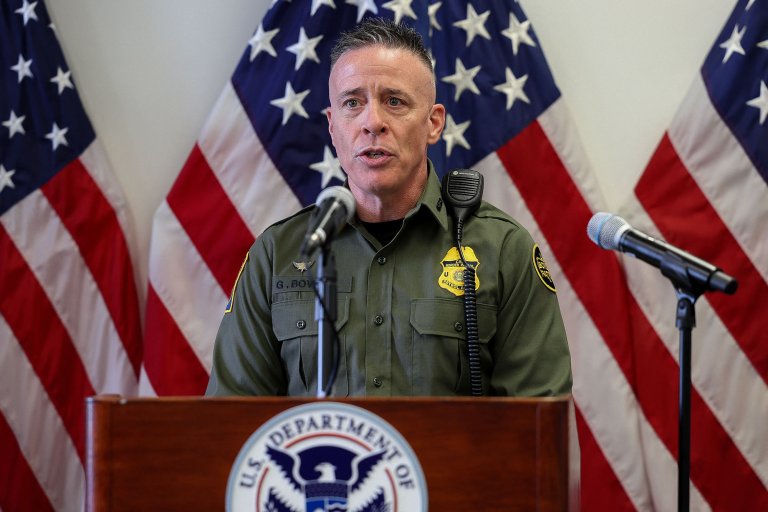
Gregory K. Bovino—often referred to as Greg Bovino—is a senior official in the U.S. Border Patrol whose leadership has drawn both commendation and controversy. Over a nearly three-decade career, Bovino has climbed from front-line agent to one of the agency’s most visible tactical commanders. His approach to enforcement, particularly in inland and urban operations, has put him at the center of a national debate over immigration policy, civil liberties, and the limits of federal power.
Bovino’s biography reveals the story of a career officer shaped by field experience, graduate-level national-security training, and a management style described by colleagues as “operationally aggressive” and “mission-first.” His public image, however, has become defined as much by legal challenges and federal court oversight as by policy success.
Read too : Post Malone Sued: The Full Story Behind the Legal Drama

Early Life and Education
Gregory K. Bovino was born in California in 1970 and developed an early interest in environmental stewardship and public service. He attended Western Carolina University, where he earned a bachelor’s degree in Natural Resources Management and Forestry, graduating magna cum laude. His academic foundation in resource management would later influence his data-driven, systems-oriented approach to federal operations.
Bovino pursued advanced education in government and strategy, earning two master’s degrees—one in Public Administration from Appalachian State University and another in National Security Strategy from the National War College in Washington, D.C. ( CBP official bio ). The combination of administrative and security studies positioned him for higher leadership roles within the Department of Homeland Security.
Entry into the Border Patrol
Bovino joined the U.S. Border Patrol on November 17, 1996, as a member of Academy Class 325. His early assignments were along the southern border, including postings in El Centro Sector (California) and Yuma Sector (Arizona). Colleagues recall his fieldwork as physically demanding and highly tactical—skills that became hallmarks of his later command style.
In his first decade, Bovino served as a Patrol Agent in Charge and later as an Assistant Chief Patrol Agent, moving between remote desert sectors and coastal stations. His willingness to volunteer for complex assignments earned him recognition inside the agency. Supervisors cited his ability to coordinate multi-agency responses during high-pressure incidents.
Career Advancement and Sector Leadership
By 2018, Bovino had achieved the senior rank of Chief Patrol Agent, first overseeing the New Orleans Sector, a region responsible for border-related enforcement along the Gulf Coast. In that role, he emphasized modernization—improving data systems, emphasizing leadership accountability, and aligning sector operations with national strategic goals.
Later, he assumed command of the El Centro Sector in southern California, an assignment that placed him directly in the spotlight of U.S. border policy. The El Centro Sector is strategically important due to its proximity to both agricultural regions and major trade corridors. Bovino’s leadership there included the deployment of advanced surveillance technology and inter-agency task forces to combat smuggling operations.
During this period, his command was cited by CBP Newsroom Releases for record numbers in narcotics interdictions and successful rescues of migrants in dangerous terrain. Internally, Bovino was regarded as a disciplined, results-oriented administrator with a talent for integrating technology with field operations.
Rise to National Prominence
Between 2024 and 2025, Gregory Bovino emerged as a key figure in the federal government’s immigration-enforcement expansion. Under executive directives emphasizing aggressive interior enforcement, Bovino and other Border Patrol leaders were tasked with coordinating large-scale operations well beyond the immediate border zones.
Media profiles from The Guardian (Sept 2025) and The Atlantic (July 2025) identified Bovino as “one of the most visible commanders executing the administration’s immigration agenda.” In this period, his units began participating in high-impact operations in Los Angeles, Kern County, and later Chicago—regions traditionally under the jurisdiction of ICE rather than Border Patrol.
His visibility was amplified by public briefings, media ride-alongs, and social-media content highlighting the operations’ intensity. Supporters within DHS described his communication style as “transparent and assertive,” while critics argued that it blurred the line between law enforcement and political messaging.
The Kern County Operation (Early 2025)
One of Bovino’s earliest high-profile operations occurred in Kern County, California, during the first quarter of 2025. The mission—officially described as a “multi-agency compliance sweep”—resulted in the arrest of 78 individuals, 77 of whom were later revealed to have no prior immigration records with federal authorities.
An investigative report by CalMatters (June 2025) detailed how the operation relied on data from workplace audits and local tip lines. Civil-rights advocates accused the Border Patrol of conducting warrantless searches and targeting individuals based on appearance rather than verified intelligence. A federal judge later ruled that aspects of the operation likely violated constitutional protections against unreasonable searches, issuing an injunction limiting similar tactics.
For Bovino, the Kern County sweep was a turning point: it drew national attention, galvanized his critics, and simultaneously established his reputation as a commander willing to act decisively.
Urban Expansion: Los Angeles and “Operation Midway Blitz”
By mid-2025, Bovino had taken command of a new initiative involving urban immigration enforcement. In Los Angeles, Border Patrol tactical units worked alongside ICE and local law enforcement to conduct coordinated raids in neighborhoods identified as “transit hubs for undocumented migration.” Drone imagery, vehicle checkpoints, and rapid-deployment teams characterized these operations.
While federal officials praised the results—hundreds of arrests and several human-smuggling cases dismantled—community leaders accused agents of overreach and excessive force. Reports surfaced of agents entering apartment buildings without warrants, prompting calls for congressional oversight.
Soon after, similar strategies were deployed in Chicago, under an operation informally known as “Midway Blitz.” It was in Chicago that Bovino’s command faced its most serious legal challenge.
The Chicago Controversy and Federal Court Oversight
In October 2025, federal court documents revealed that Border Patrol agents under Bovino’s direction used tear gas and less-lethal munitions to disperse protesters during a raid in the city’s Little Village neighborhood. The raid targeted suspected members of a smuggling network, but nearby demonstrations escalated into confrontations.
Plaintiffs—supported by civil-rights organizations—argued that the use of force violated an existing Temporary Restraining Order (TRO) that required agents to issue warnings and wear visible identification during operations. Judge Maria Anders of the Northern District of Illinois ordered Bovino to appear in court daily and produce body-camera footage and operational logs.
The case became a flashpoint for questions of accountability and judicial authority. Supporters of Bovino claimed that field conditions necessitated rapid tactical decisions. Critics countered that the Border Patrol had operated beyond its legal authority inside an urban environment.
In late October 2025, a federal appeals court temporarily stayed the daily-appearance order, citing separation-of-powers concerns, though the underlying civil-rights case remains active. The episode elevated Bovino’s name from relative anonymity within DHS circles to front-page news nationwide.
Leadership Style and Internal Reputation
Within the agency, Greg Bovino is described as a “field commander with headquarters instincts.” He maintains a reputation for discipline, meticulous planning, and strict chain-of-command adherence. Former colleagues say he expects measurable outcomes and is known for visiting front-line units unannounced to assess readiness.
Bovino’s defenders highlight his record of operational success: major drug interdictions, rescue missions, and efficiency reforms in resource deployment. They argue that criticism often stems from political opposition to enforcement itself rather than to misconduct.
However, his detractors—both inside and outside government—view his tactics as emblematic of an overly militarized approach to immigration enforcement. Civil-liberties groups contend that under his leadership, the Border Patrol has blurred its jurisdictional boundaries, effectively functioning as a domestic policing force in cities far from any border.
Policy and Legal Implications
The Greg Bovino controversy underscores the evolving boundaries of federal enforcement authority:
- Expansion of Border Patrol Jurisdiction
Bovino’s inland operations tested long-standing assumptions that the Border Patrol’s focus should remain within 100 miles of the border. His interpretation of the agency’s mandate aligns with executive directives granting broader discretion for “homeland enforcement.” The legal system’s mixed response—upholding some tactics while restraining others—illustrates the unsettled nature of this authority. - Civil Liberties and Oversight
Court-ordered TROs requiring identification badges, body cameras, and pre-raid notifications indicate rising judicial concern about transparency. Bovino’s teams have become case studies for how federal agencies respond to such oversight without compromising mission security. - Institutional Culture and Accountability
Bovino’s career trajectory reflects the Border Patrol’s internal culture: loyalty, resilience, and aggressive enforcement are rewarded. Yet, as public scrutiny increases, future leaders may face pressure to balance operational intensity with civil-rights safeguards.
Media and Public Perception
Since mid-2025, Gregory Bovino has been the subject of extensive national coverage. The Guardian characterized him as “the field general of the administration’s immigration crackdown,” while CalMatters and The Atlantic framed his leadership as a microcosm of the broader clash between enforcement priorities and civil-liberties principles.
Public reaction has been polarized. Some conservative commentators have hailed him as a defender of law and order who brings accountability to immigration enforcement. Progressive outlets and human-rights groups view him as a symbol of federal overreach.
His image—often in tactical gear at press conferences—has become both an emblem of decisive governance and a lightning rod for criticism. Social-media discourse around #GregBovino frequently trends following major legal rulings or protests related to his operations.
Personal Life and Values
Though publicly reserved, Bovino has occasionally spoken about his background in forestry and his belief in stewardship—of land, resources, and national security alike. His academic writing at the National War College emphasized “strategic adaptability” and the importance of maintaining lawful frameworks in complex security environments.
Colleagues note that he maintains a low personal profile outside of work, preferring outdoor activities and volunteer engagements with youth leadership programs in California. CBP profiles describe him as a family-oriented professional who emphasizes discipline, education, and service.
Legacy and Outlook
As of late 2025, Gregory Bovino remains one of the most discussed leaders in U.S. immigration enforcement. His actions have shaped the direction of the Border Patrol, redefining how and where the agency operates. Whether his tenure is remembered as visionary or divisive will depend on ongoing court rulings and policy outcomes.
For the Department of Homeland Security, Bovino represents both opportunity and risk: an experienced operational commander capable of executing national directives efficiently, and a public figure whose methods have provoked legal and ethical questions that could influence future reform.
Key Takeaways
- Greg Bovino’s biography spans nearly 30 years of federal service, from front-line agent to sector chief.
- His education includes advanced degrees in public administration and national security, underscoring his strategic credentials.
- His leadership has been marked by data-driven enforcement, inter-agency coordination, and expansion of border tactics into urban centers.
- Controversies—notably in Kern County and Chicago—have led to ongoing federal litigation and raised constitutional concerns.
- Public perception remains divided: to some, he embodies disciplined enforcement; to others, unchecked authority.
Gregory K. Bovino’s story is not merely a professional biography—it is a reflection of the United States’ broader struggle to define the boundaries of enforcement, accountability, and constitutional rights in the 21st century.
As federal courts continue to evaluate the legality of his operations and the administration refines its immigration strategy, Greg Bovino’s legacy will likely remain a pivotal reference point for policymakers, scholars, and advocates alike.