
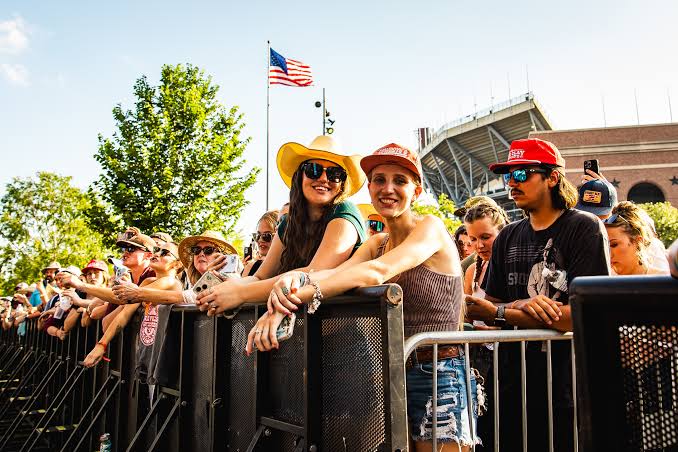
The lights dim, the crowd roars, and the steel guitars twang under a big Texas sky. But for every unforgettable performance at a Texas country music festival, there’s an entire world humming just out of sight—behind the stage. It’s a place where artists, crews, caterers, and community volunteers turn open fields into cultural celebrations of sound and spirit.
From Luck Reunion outside Austin to the legendary Kerrville Folk Festival, the backstage universe of Texas country festivals is a fascinating mix of grit, camaraderie, chaos, and charm. This article takes you past the velvet ropes and hay bales to reveal what really happens before and after the music starts.

1. The Backbone of the Festival: Production in Motion
Behind every Texas country festival lies a small army of planners, electricians, stagehands, and local volunteers. Setting up a festival like Larry Joe Taylor’s Texas Music Festival (Stephenville) can take up to six months of planning and three weeks of on-site work (Texas Music Office, 2024).
1.1 Building a Temporary Town
Most Texas festivals occur in open ranches or fairgrounds. That means crews must literally build a city from scratch.
- Power lines and backup generators supply energy to sound systems, food vendors, and RV camps.
- Portable showers, medical tents, and artist lounges must meet state safety standards.
- Hundreds of local workers, many from nearby schools or volunteer groups, handle logistics like parking, trash, and security.
It’s a symphony of coordination. “If the public sees us, we’ve messed up,” jokes production manager Lisa Montgomery, who’s worked with Luck Reunion since 2018. “Our goal is to make chaos look like magic.”
1.2 The Sound Engineers’ Secret Dance
Sound engineers are the unsung heroes of Texas country festivals. From balancing steel guitars and fiddles to managing wind interference on outdoor stages, the work is highly technical and fast-paced.
Each performance has a soundcheck window, sometimes as short as 15 minutes, where engineers fine-tune levels before thousands of listeners arrive. According to the Austin-based SoundTech Collective (2023), more than 60% of outdoor sound issues at Texas festivals are caused by temperature shifts and humidity—not equipment failure.
Ready too : The New Festival Boom: Why Small-Town Texas Is Becoming the Next Coachella
2. Artist Life Offstage: Barbecue, Bonds, and Burnout
2.1 The “Family” Behind the Fame
For artists, Texas country festivals feel more like reunions than gigs. “You don’t just play and leave—you stay, jam, eat, and catch up,” says singer-songwriter Wade Bowen, a mainstay of the Texas Red Dirt scene (Rolling Stone Country, 2024).
Unlike commercial mega-fests, Texas events foster long-term relationships. Backstage, you’ll find stars and newcomers trading guitars, stories, and whiskey shots. Jam sessions stretch until sunrise. Rivalry takes a back seat to kinship.
2.2 The Famous Festival Barbecue
Forget fancy catering—backstage in Texas smells like smoked brisket. Many festivals hire local pitmasters to feed artists and staff. At Steamboat MusicFest and Mile 0 Fest in Key West (founded by Texas promoters), meals are as sacred as soundchecks.
Willie Nelson’s Luck Reunion is legendary for its food: slow-cooked ribs, sweet tea, and homemade pies from nearby Spicewood kitchens. For many artists, that hospitality captures what makes Texas country unique—it’s community first, business second.
2.3 Managing Exhaustion and Emotion
Despite the laid-back atmosphere, touring musicians face grueling schedules. Festivals often mean playing multiple sets over one weekend, meeting fans, and traveling hundreds of miles between gigs.
Kaitlin Butts, a rising Texas artist, told The Boot (2024), “Festival weekends are magical, but they’re also draining. You go from absolute joy to total fatigue in hours. Backstage naps are sacred.”
3. Behind the Curtain: Stage Managers and Crew Chaos
3.1 The Real MVPs
Stage managers hold the entire show together. They manage set transitions, troubleshoot technical issues, and keep performers on schedule. One late band can delay dozens of acts.
At Gruene Music & Wine Festival, the team uses color-coded wristbands and a “30-second rule”: if a performer isn’t ready within half a minute of call time, they’re bumped to a later slot. “It’s not personal—it’s precision,” notes operations director Mark Heller (Texas Live Events Journal, 2023).
3.2 The Controlled Chaos
Between acts, the stage transforms—drum kits roll off, microphones swap, lighting rigs adjust. Dozens of crew members move with choreographed efficiency. To outsiders, it looks like chaos. To insiders, it’s ballet.
“Every festival has its language,” says lighting designer Erika Ramirez. “One nod from the monitor engineer can save a five-minute delay. That’s the difference between professionalism and panic.”
4. The Community Engine: Volunteers and Locals
4.1 Small-Town Pride in Action
Many Texas country festivals depend heavily on volunteers—sometimes hundreds of them. These community members handle ticketing, parking, recycling, and merch sales. In return, they gain free access, backstage meals, and a sense of belonging.
At Kerrville Folk Festival, some volunteers have been returning for over 30 years. “We’re not just helping—we’re part of the legacy,” says longtime volunteer and teacher Sarah Mendez (Kerrville Daily Times, 2023).
4.2 Local Businesses Thrive
From beer distributors in Fredericksburg to lodging owners in Burnet, small-town economies thrive on festival weekends. According to a Texas A&M Economic Impact Report (2023), music festivals bring an average 35% boost in local sales revenue during event weeks.
These festivals are economic lifelines, transforming quiet months into bustling seasons of prosperity.
5. The Night After the Show: What the Audience Never Sees
5.1 Tear-Down in the Dark
When the final encore fades, the real work begins. Crews spend up to 18 hours overnight dismantling stages, lights, and fences. Trucks line up at 2 a.m., loaded with equipment heading to the next venue.
For big festivals like Larry Joe Taylor Fest, teardown can take five days and require over 200 workers (Texas Music Industry Association, 2024).
5.2 Late-Night Acoustic Jams
Once the crowd is gone, musicians often pull out their guitars again—not for fame, but for fun. At Kerrville, post-show campfire sessions are a cherished tradition. “You’ll see Grammy winners sitting next to high schoolers, swapping songs under the stars,” notes songwriter Darden Smith (Texas Heritage Foundation, 2024).
5.3 The Cleanup Crew Heroes
Trash collection, recycling, and land restoration follow strict environmental codes. Many Texas festivals partner with sustainability groups to ensure minimal ecological impact. At UtopiaFest, volunteers plant trees each year to offset carbon emissions (Austin Chronicle, 2023).
6. Safety, Security, and Storms
6.1 The Texas Weather Factor
Mother Nature is the one element even the best organizers can’t control. Sudden thunderstorms, dust storms, and heat waves are common. Festival safety teams monitor weather in real time, using radar systems and lightning detection software.
At Austin’s Blues on the Green in 2023, organizers safely evacuated over 10,000 attendees ahead of an incoming storm—without injuries or panic (KVUE News, 2023).
6.2 Medical and Security Coordination
Every festival must comply with Texas mass-gathering laws, requiring on-site EMTs, police presence, and clear evacuation routes. Medical tents typically treat dehydration, sunburn, and sprains more than anything severe. Still, preparation is vital.
Security also handles crowd flow, artist privacy, and vendor regulation. Unlike massive festivals with barricades and drones, most Texas country events favor approachable, community-based safety—locals protecting locals.
7. The Art of Keeping It “Texas”
7.1 Authenticity as a Business Model
Texas country festivals succeed because they’ve resisted over-commercialization. Sponsors exist, but they rarely dominate. “We want fans to taste the barbecue, not see brand logos,” says Luck Reunion co-founder Matt Bizer (Billboard, 2023).
7.2 Showcasing Local Talent
Smaller stages spotlight emerging Texas acts like Kaitlin Butts, William Clark Green, and Shane Smith & The Saints. This local-first approach sustains the ecosystem that keeps country music alive outside Nashville.
7.3 The Spirit of Collaboration
Collaboration defines the backstage ethos. Artists jump into each other’s sets, share band members, and often record songs together afterward. “It’s not competition—it’s communion,” says singer-songwriter Jamie Lin Wilson (Texas Music Scene Interview, 2023).
8. From Behind the Scenes to Center Stage: The Broader Impact
8.1 Festivals as Cultural Diplomats
Texas country festivals are more than entertainment—they’re cultural ambassadors. They attract fans from across the U.S. and abroad, showcasing the authenticity of Texan artistry.
A 2024 study by VisitTexas found that one in five festivalgoers traveled from out of state, contributing to over $400 million in tourism revenue annually.
8.2 Technology and the New Era
Streaming and social media now bring the backstage experience to fans. TikTok and Instagram clips from Luck Reunion or Steamboat show candid artist moments—tuning guitars, sharing jokes, prepping for encores. This transparency humanizes artists and builds loyalty.
8.3 Mentorship and Legacy
Seasoned Texas musicians often mentor younger acts during festivals. It’s an informal apprenticeship system that keeps the state’s country music lineage alive. The backstage is both a workplace and a classroom.
Conclusion
Behind the twang, the lights, and the roar of the crowd, Texas country festivals run on something deeper than showbiz—it’s heart, heritage, and hard work. Crews labor through the night, volunteers give freely, and artists share space like family.
What really happens behind the stages of Texas country festivals isn’t chaos—it’s connection. It’s where strangers become collaborators, where music transcends money, and where the spirit of Texas is built one song, one handshake, and one late-night jam at a time.
In a world dominated by overproduced spectacles, Texas festivals remind us that authenticity still matters. Because long after the crowd goes home, the sound of guitars and laughter continues to echo behind the stage—where the real magic happens.