
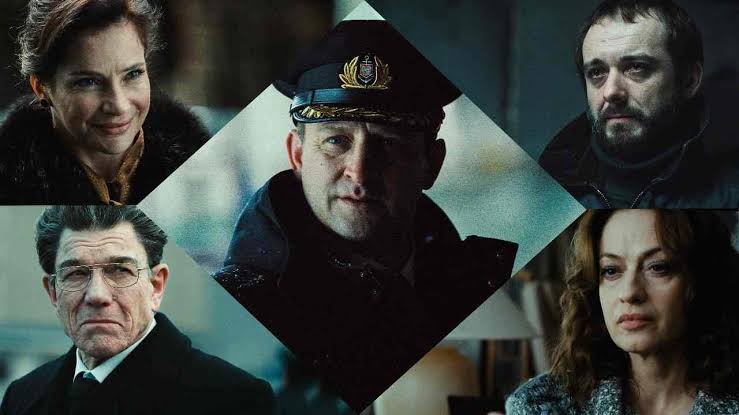
In the history of Polish maritime navigation, the name Andrzej Ułasiewicz is forever tied to one of Poland’s most tragic post-war sea disasters — the sinking of the ferry MS Jan Heweliusz on the night of January 13–14, 1993.
This article explores his life, experience, the decisions he made, the circumstances of the tragedy, and his legacy. Who was Captain Ułasiewicz — a hero, a scapegoat, or a man caught between duty and disaster?
Read too : The Mystery of Piotr Binter: Scene-by-Scene Breakdown and Deeper Meaning Behind the Enigma

1. Early Life and Maritime Career
Andrzej Ułasiewicz was born on June 12, 1946. After graduating from the Maritime School in Gdynia in 1967, he became a licensed officer in the merchant navy. Over the next decades, he served on multiple ships of the Polish Ocean Lines (PLO) and, by the late 1980s, he had taken command of the ferry Jan Heweliusz, which operated between Świnoujście and Ystad.
Those who knew him described him as a disciplined and highly experienced mariner — a man who knew the Baltic and his route intimately. When Heweliusz set sail that fateful night, it was Captain Ułasiewicz who bore full responsibility for the vessel and her people.
2. The Condition of the Ship and the Voyage Ahead
Before understanding what happened, it’s crucial to examine the ship’s technical condition and the context leading to the tragedy.
- MS Jan Heweliusz was launched in 1977 in Norway as a rail-car ferry.
- Over the years, it suffered numerous accidents and structural damages — including collisions, a 1986 fire, and chronic problems with stability and ballast systems.
- On the night of the final voyage, the Baltic was in the grip of a severe storm, with high waves and near-freezing water temperatures.
Despite those dangers, the ferry sailed — a decision that remains at the center of debate to this day.
3. The Night of January 13–14, 1993 — A Chronicle of Disaster
On the night of January 13–14, the Heweliusz departed Świnoujście for Ystad carrying 36 passengers and 29 crew members.
As the storm intensified, the ship began to list heavily.
Captain Ułasiewicz, aware of the delay and the worsening weather, made the critical calls.
When the situation turned desperate, he sent the distress signal — “Mayday.”
According to survivors, he remained on the bridge until the end, coordinating evacuation attempts.
At 5:12 a.m., the Heweliusz capsized and sank.
The Baltic claimed 55 lives, making it the deadliest peacetime maritime disaster in modern Polish history.
Captain Ułasiewicz was among the dead.
4. Responsibility and Controversy — Hero or Culprit?
After the sinking, investigations began immediately. Experts, maritime authorities, and the media tried to determine who was responsible.
- Reports revealed that the ship had a damaged stern gate, and stability tests were not performed after its latest repairs. Technically, the ferry should never have sailed that day.
- Initially, Captain Ułasiewicz was blamed for the decision to depart.
- Later findings, however, painted a more complex picture — the failure was systemic, involving not only the captain but also the ship’s owner and inspectors who had certified the vessel.
Witnesses and investigators emphasized that Ułasiewicz could have abandoned ship but chose to stay, fulfilling the unwritten code of a captain who “goes down with his ship.”
Some maritime experts even described his death as a “conscious and voluntary decision.”
Thus, he remains both a symbol of duty and tragedy — a man whose choices are still studied in maritime academies as examples of both professionalism and the limits of human endurance.
5. The Captain in Culture and Collective Memory
Over time, the story of Heweliusz Kapitan Ułasiewicz transcended official reports and entered the realm of cultural memory.
- In 2025, Netflix released the docudrama Heweliusz, with actor Borys Szyc portraying the captain.
Szyc said in interviews that hearing the authentic Mayday recordings of Ułasiewicz moved him to tears — his goal was “to bring this man back to life for a few moments.” - In Poland’s collective memory, Captain Ułasiewicz symbolizes the thin line between heroism and helplessness, between fulfilling duty and being crushed by systemic negligence.
He is remembered not as a one-dimensional hero or villain but as a profoundly human figure caught in a perfect storm of fate and responsibility.
6. Legacy and Lessons for Maritime Safety
The tragedy of Jan Heweliusz and its captain reshaped Polish maritime safety practices in several ways:
- Stricter technical supervision — ships with structural damage now face immediate suspension from service until full inspections are completed.
- Enhanced storm-readiness protocols — captains have clearer authority to delay departures without commercial penalty.
- Improved rescue operations — the disaster exposed serious flaws in coordination between Polish and Swedish rescue teams.
The loss also served as a moral lesson: even the most skilled captain cannot compensate for neglected maintenance or systemic failure.
It reminded the industry that safety must override schedules and economic pressure.
7. Who Was Captain Ułasiewicz, Really?
When we look beyond official verdicts and press headlines, Andrzej Ułasiewicz emerges as a deeply tragic but admirable figure.
- He was a career mariner, proud of his work and respected by his crew.
- He faced the worst possible scenario — a storm, a damaged ship, and dozens of lives in his hands.
- His last radio transmissions showed calmness and professionalism, even as the situation turned hopeless.
His actions are now viewed through multiple lenses — technical, ethical, and psychological.
Was he a hero who stayed to the end, or a captain trapped by duty in a system that offered him no good choices?
Perhaps he was both.
8. Why the Story Still Matters
The Heweliusz tragedy remains a key point of reference in Poland’s maritime education.
Every cadet at the Gdynia Maritime University studies it not only as a disaster report but as a lesson in leadership, ethics, and accountability.
It is also a warning about organizational pressure — how the desire to maintain timetables or avoid penalties can push crews into fatal situations.
For the public, the name Heweliusz Kapitan Ułasiewicz carries emotional weight — it stands for the bravery and vulnerability of those who live and die by the sea.
9. The Human Dimension — Family and Remembrance
Captain Ułasiewicz left behind a wife, Jolanta Ułasiewicz, who became an outspoken advocate for the families of the victims.
She fought for years to uncover the truth about what happened that night and to preserve her husband’s memory.
A tombstone in his honor stands at the cemetery in Świnoujście, often visited by mariners, students, and survivors’ families.
For many Poles, that place symbolizes not just mourning but also respect for those who risk their lives at sea.
The name “Ułasiewicz” has thus become part of Poland’s maritime identity — a reminder of both human courage and institutional failure.
10. FAQ — Common Questions About the Tragedy
Q 1: Was Captain Ułasiewicz found guilty of causing the disaster?
A: Initial investigations placed significant blame on him for setting sail despite warnings, but later court rulings recognized shared responsibility between the captain, the shipowner, and maritime authorities that had allowed the unseaworthy vessel to operate.
Q 2: Could he have survived if he abandoned ship?
A: Yes — some survivors said he had a chance to escape but refused, choosing to stay on the bridge. Many in the maritime community see this as a final act of duty.
Q 3: Why does the case still draw attention decades later?
A: Because it exposes a web of technical failures, corporate negligence, and human tragedy — issues that remain relevant anywhere ships and people meet the sea.
11. Reflections and Final Thoughts
The story of Heweliusz Kapitan Ułasiewicz is more than a maritime disaster. It’s a study of leadership under pressure, moral responsibility, and the cost of systemic neglect.
He was not a perfect man — no captain is — but he embodied the core values of seamanship: duty, composure, and sacrifice.
He didn’t abandon ship; he faced the storm with his crew. Whether one views that decision as heroic or tragic, it remains profoundly human.
In the end, his life and death teach a universal lesson:
The sea forgives no mistakes, but it remembers courage.
12. Conclusion — The Enduring Legacy of Heweliusz Kapitan Ułasiewicz
Three decades after the sinking, the name of Captain Andrzej Ułasiewicz still echoes in Poland’s maritime consciousness.
He stands as a symbol of both courage and consequence — a man who fulfilled his duty to the last breath, yet whose fate reminds us of the tragic price of human and institutional errors.
The Heweliusz catastrophe changed Polish shipping regulations, inspired documentaries, and continues to provoke reflection among seafarers around the world.
For every mariner who faces the decision to sail or to wait, his story whispers a warning: “Respect the sea, or it will take everything.”