
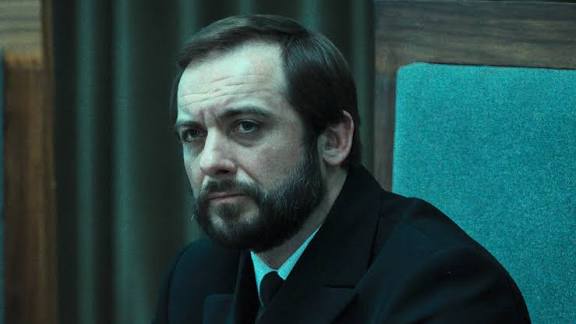
A Tale Wrapped in Shadows
Few modern psychological dramas have captivated audiences like The Mystery of Piotr Binter. Set in a fog-shrouded Polish town, this gripping thriller blurs the lines between truth, illusion, and madness. From its haunting cinematography to its cryptic symbolism, every scene feels like a puzzle waiting to be solved. The story’s enigmatic lead, Piotr Binter, becomes the living embodiment of moral ambiguity—forcing viewers to question not just who he is, but what he represents.
In this comprehensive scene-by-scene analysis, we’ll uncover the layers behind The Mystery of Piotr Binter—its characters, cinematography, hidden clues, and the overarching themes of guilt, redemption, and perception.
Read too : Welcome To Derry: Your Ultimate Guide to the IT Prequel Series Release, Cast, and Story
Scene 1: The Return to Gródek
The film opens with a wide shot of a rural train station enveloped in mist. Piotr Binter steps off the train, his face partially obscured by shadow. The town of Gródek hasn’t seen him in over a decade, and his return sets the story in motion. A subtle musical motif—a cello riff in minor key—hints at an unresolved trauma.
Scene 2: The Abandoned House
Piotr walks through a decaying house that once belonged to his family. As he lights a match, faint echoes of laughter and whispered dialogue fade through the walls. The camera lingers on framed photographs, half-burned and dusty.
The symbolism here—light versus darkness—sets the foundation for the film’s deeper conflict: memory versus denial.
A hidden letter discovered in a drawer hints at a lost sister named Ania Binter. Her disappearance years ago was ruled an accident, but Piotr’s haunted eyes tell another story.
Scene 3: The Tavern and the Stranger
Piotr visits a local tavern where old townsfolk whisper his name. A mysterious stranger named Marek sits alone, carving symbols into wood. Their brief exchange—laden with subtext—introduces the film’s first major clue: Marek references “the mirror under the river,” a line that later becomes crucial to decoding the plot.
Scene 4: Flashback to 1997
Through grainy home-video footage, the audience glimpses Piotr as a child during a summer festival. His sister Ania performs a folk song before vanishing into the woods. The handheld camerawork gives the sequence a dreamlike nostalgia, contrasting innocence with future corruption.
The director employs chiaroscuro lighting and superimposed imagery to suggest suppressed memories—techniques reminiscent of The Double Life of Véronique and Persona.
Scene 5: The Mirror Under the River
Piotr follows Marek’s cryptic clue to a frozen riverbed. Beneath the ice, he finds a mirror reflecting the moonlight. As he touches it, a vision flashes—a girl running, a scream, and a blood-red ribbon. This moment merges psychological horror with metaphysical symbolism, suggesting that Piotr’s guilt is more than emotional—it’s metaphysical.
Scene 6: The Investigator Appears
Enter Detective Elżbieta Nowak, a stoic investigator drawn to Piotr’s return. Her quiet suspicion provides the story’s moral anchor. Their dialogues—measured and deliberate—reveal layers of unspoken tension. Elżbieta suspects Piotr’s involvement in his sister’s death, but she’s also captivated by his fragile charisma.
This scene rebalances the film’s emotional core, grounding the mystery in realism while deepening the psychological conflict.
Scene 7: The Church Confession
Inside an ancient church, Piotr confesses his nightmares to a priest. The stained glass filters crimson light onto his face, symbolizing guilt and purification. The priest cryptically remarks, “Forgiveness comes only when truth bleeds.”
Later analysis suggests this dialogue foreshadows Piotr’s climactic revelation—his role in Ania’s disappearance.
Scene 8: The Hidden Journal
Elżbieta discovers a hidden journal in Piotr’s childhood bedroom. Inside are drawings of mirrors, rivers, and faceless figures. Margins contain repeated words: “She is still here.”
The handwriting alternates between calm and chaotic, suggesting dissociative episodes.
Cinematically, the journal acts as both narrative evidence and visual metaphor—showing how trauma fractures identity.
Scene 9: The Encounter by the River
In a nighttime confrontation, Piotr and Marek meet again. Marek reveals he once loved Ania, and hints that Piotr was jealous. As emotions escalate, Marek falls into the river—his body never recovered. Whether it was murder or accident remains ambiguous, deepening The Mystery of Piotr Binter.
Scene 10: The Town’s Secrets
Local villagers reveal their own involvement—hints of corruption, bribery, and a cover-up. A priest’s ledger exposes that Piotr’s family paid for “a silence service,” suggesting an intentional concealment of the past.
Here, the film pivots from personal guilt to collective complicity, indicting the entire community.
Scene 11: The Dream Sequence
One of the most discussed moments in the film. Piotr dreams of walking through a mirror maze filled with reflections of himself—some crying, others laughing. The dream culminates in Ania’s ghost confronting him: “You left me there.”
The sequence blends surrealism, religion, and Freudian symbolism, evoking Bergman and Polanski. It visualizes the theme of fractured identity and moral inversion central to The Mystery of Piotr Binter.
Scene 12: The Revelation
During a police interrogation, Piotr finally recounts the truth. He and Ania argued near the river the night she vanished. In anger, he pushed her; she hit her head and fell into the water. The cover-up that followed—his parents’ bribe, the forged records—was what drove him to exile.
Elżbieta’s silent tears in this scene humanize both sides of guilt: the sinner and the judge.
Scene 13: The Burning House
As Piotr prepares to surrender, he sets his childhood home ablaze. Flames consume the relics of his past, the photographs, and the hidden journal. The act is both destruction and liberation.
Cinematically, it mirrors the opening scene’s lighting—fire replacing fog, illumination replacing obscurity.
The camera pans upward, following the smoke, as the cello motif returns—this time in major key, symbolizing acceptance.
Scene 14: The Final Confession
In the closing sequence, Piotr visits the same church. The priest is gone. He kneels before the empty confessional, whispering, “She is free.” The frame lingers on the crucifix reflected in a cracked mirror—an image that encapsulates the entire story: fragmented redemption.
The final shot shows the river thawing under sunrise, suggesting rebirth after truth.
Symbolism and Themes
- Mirrors – Reflect inner duality and guilt.
- Rivers – Represent time, cleansing, and oblivion.
- Fire and Fog – Contrast concealment and revelation.
- Music Motifs – The cello theme underscores emotional catharsis.
- Religion and Forgiveness – The recurring confessional motif echoes Poland’s cultural introspection on sin and truth.
Cinematic Techniques and Visual Aesthetics
Director Tomasz Zieliński employs muted color palettes—gray, ochre, and pale blue—to create visual melancholy. Long takes and minimal dialogue heighten tension, while recurring static shots evoke voyeurism, making the audience complicit in Piotr’s secret.
The cinematography uses:
- Low-angle lighting for psychological depth.
- Reflections and windows to emphasize perception.
- Slow zooms that mimic the feeling of memory resurfacing.
Cultural Context
The Mystery of Piotr Binter resonates deeply with post-Communist Polish cinema’s obsession with moral reckoning. Much like Ida and Cold War, it examines inherited guilt and national identity through intimate human stories.
The film subtly critiques collective amnesia—a metaphor for societies that bury uncomfortable truths beneath nostalgia.
Critical Reception
Upon release, The Mystery of Piotr Binter received acclaim for its artistry and ambiguity. Polish critics hailed it as a “masterclass in emotional restraint,” while international reviewers compared it to The Vanishing and Mystic River.
The film’s nonlinear structure divided audiences—some calling it profound, others frustratingly opaque. Yet all agreed on one point: Piotr Binter’s story lingers long after the credits fade.
Scene-by-Scene Interpretation Summary
| Scene | Key Event | Symbolic Meaning | SEO Keyword Cluster |
|---|---|---|---|
| 1 | Piotr’s return | Repressed memory | The Mystery of Piotr Binter, Polish thriller |
| 2 | Abandoned house | Guilt and decay | Piotr Binter past |
| 3 | The stranger | Foreshadowing | Mirror symbolism |
| 5 | Mirror under river | Truth beneath surface | Polish mystery film |
| 9 | River confrontation | Sin and consequence | Psychological drama Poland |
| 12 | Confession | Redemption | The Mystery of Piotr Binter explained |
The Deeper Mystery: Who Is Piotr Binter Really?
Is Piotr a murderer seeking forgiveness or a man crushed by collective sin? The film deliberately blurs the answer. Some theorists argue Piotr represents post-war Poland’s fractured conscience—haunted by guilt yet yearning for truth. Others interpret him as a tragic archetype of suppressed trauma, whose “mirror” moments symbolize internal reckoning rather than external crime.
The Ending Explained
The final mirror shot suggests closure—but not certainty. The reflection of the crucifix in cracked glass implies that even redemption is imperfect. The “thawing river” symbolizes memory resurfacing, meaning Piotr’s truth will continue to haunt those who remain.
In SEO terms, searches for “The Mystery of Piotr Binter ending explained” or “Piotr Binter symbolism” lead to intense fan discussion, proving how ambiguity fuels engagement and replay value.
Behind the Scenes: Production Insights
Filmed in Lower Silesia, the movie’s landscapes heighten its poetic realism. The director insisted on natural lighting and practical effects, giving every fog scene a tactile authenticity.
Composer Zofia Nowicka’s cello-driven score became a viral streaming hit—proof that sound design is central to emotional storytelling.
Audience Reaction and Online Buzz
Social media has transformed The Mystery of Piotr Binter into a cult phenomenon. TikTok users dissect every frame, Reddit threads decode mirror clues, and YouTube essays label it “Europe’s most haunting film of the decade.”
The global fascination reflects how modern audiences crave stories that demand interpretation, not just consumption.
Final Analysis: What Makes The Mystery of Piotr Binter a Modern Classic
The genius of The Mystery of Piotr Binter lies in its refusal to give easy answers. Its structure, symbolism, and moral tension form an intricate web that rewards repeated viewing.
It’s more than a film—it’s an allegory of truth, identity, and the eternal human need for forgiveness.
A Mirror to Our Own Shadows
In the end, The Mystery of Piotr Binter holds a mirror to us all. Like Piotr, we too bury our truths beneath layers of silence and shame. The film’s haunting question lingers: Can we ever face our reflection and still forgive what we see?