
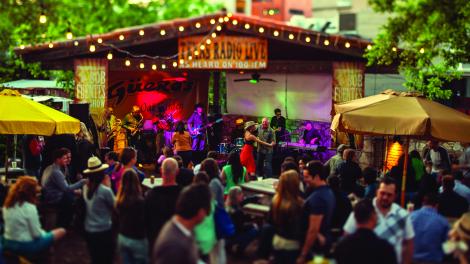
From Dusty Dance Floors to Global Destinations
In Texas, music isn’t a pastime — it’s a form of cultural wealth. Across every small town and city skyline, from Luckenbach’s rustic charm to Austin’s electrified stages, festivals have evolved into more than gatherings of sound. They’ve become the currency of identity, economy, and community.
Over the past two decades, Texas’s music festivals have grown into global phenomena. They shape local economies, influence social movements, and serve as the state’s most powerful soft-power export.
According to the Texas Music Office’s 2024 Annual Report, the music tourism industry generated over $9.5 billion in direct spending, with festivals leading the surge. But beyond economics, these events reflect something deeper — the beating heart of Texan culture, where tradition meets transformation.

1. A Legacy Rooted in Dance Halls and Dust Roads
Texas’s relationship with music festivals didn’t begin with Coachella-style spectacles. It began in community halls and county fairs.
Early 20th-century gatherings in towns like Bandera, Gruene, and Fredericksburg featured fiddle contests, gospel singalongs, and early country bands. These weren’t commercial events — they were social glue.
As Texas Monthly notes in its 2023 feature “Roots of the Lone Star Sound,” small-town gatherings “set the rhythm for Texan identity long before arenas and sponsorships arrived.”
By the 1970s, festivals like Willie Nelson’s Fourth of July Picnic brought that grassroots spirit into the modern age, merging counterculture, patriotism, and musical rebellion. That moment marked the birth of Texas’s festival economy.
2. The Modern Boom: When Music Became a Movement
In the early 2000s, Texas witnessed a cultural inflection point. Festivals like Austin City Limits (ACL) and South by Southwest (SXSW) catapulted Texas onto the world stage.
What began as regional celebrations quickly transformed into cultural commodities — experiences that attracted global audiences and media attention.
- SXSW 2024 hosted over 345,000 attendees from 112 countries (SXSW Impact Report, 2024).
- Austin City Limits generated an estimated $460 million in economic activity (Austin Chamber of Commerce, 2024).
This boom wasn’t just about music. It was about narrative. Festivals became storytelling platforms — about Texas’s creativity, resilience, and community values.
3. The Cultural Currency of Sound
Music as Identity and Influence
In a digital world where attention is fleeting, festivals have become one of the few remaining authentic cultural transactions. People don’t just attend — they invest emotionally, socially, and symbolically.
Sociologist Dr. Helen McRae from the University of Texas at Austin describes festivals as “modern rituals of belonging.” She adds:
“Texas festivals are not mere entertainment. They are expressions of pride, participation, and shared story — a living exchange of cultural currency.”
From the Red Dirt Revival Festival to Outlaws & Legends, each event showcases how Texan sound — country, blues, Americana, and even indie-rock — translates into a global cultural brand.
4. Local Economies, Global Reach
For Texas towns, festivals are more than celebrations — they’re engines of growth.
According to the Texas Economic Development Report (2024), festival-related tourism has increased local revenue in small towns by up to 38% annually. Towns like Marfa, New Braunfels, and Dripping Springs have become creative economies anchored by annual festivals.
These events generate jobs for stage crews, caterers, artisans, and hospitality workers — and fuel everything from craft breweries to boutique hotels.
As The Dallas Morning News highlighted in 2024:
“Where Texas once exported oil and cattle, it now exports culture — and music is its strongest currency.”
5. Diversity and Inclusion: Expanding the Soundscape
Modern Texas festivals are rewriting who gets to take the stage.
While country and Americana remain foundational, the rise of Latinx, Black, and female-fronted acts has expanded the sound of Texas. Events like the Tejano Explosion (San Antonio) and AfroTech Music Experience (Austin) are challenging stereotypes while broadening audiences.
At 2024’s SXSW, more than 45% of featured artists identified as women or non-binary, marking a historic milestone (SXSW Diversity Index Report, 2024).
This inclusivity has not only diversified the state’s music but made Texas an international model for cultural innovation.
6. The Festival as a Modern Marketplace
Festivals are now powerful commercial ecosystems.
A Pollstar Live Data (2024) analysis revealed that merchandise and vendor sales at Texas festivals surpassed $210 million in a single season, reflecting a thriving experience-based economy.
But the real profit lies in branding and storytelling. Local distilleries, cowboy bootmakers, and apparel brands integrate into the festival experience — transforming these events into immersive, multi-sensory marketplaces.
As Forbes noted in a 2023 business feature, “Texas festivals are cultural marketing at its finest — authenticity packaged as lifestyle.”
7. Technology Meets Tradition
One secret behind Texas’s festival success is its ability to blend old-school charm with modern innovation.
Hybrid ticketing, live streaming, and VR-enhanced stages have allowed festivals like LJT Fest and Two Step Inn to reach global audiences without losing their roots.
At Austin’s Moody Center, for instance, integrated 5G tech allows for real-time fan interaction and live broadcast experiences (TechStage Review, 2024).
This tech infusion ensures Texas remains a global leader — a state where the cowboy boot meets the smartphone.
8. Environmental Sustainability: The New Frontier
As the scale of festivals grows, so does the awareness of environmental impact.
Texas organizers are increasingly adopting green initiatives such as reusable cup systems, solar-powered stages, and local sourcing. The Austin City Limits Green Plan (2024) reported a 52% waste reduction compared to 2019 levels, setting an example for national events.
Meanwhile, smaller festivals are embracing regenerative tourism, promoting eco-friendly travel and rural preservation.
In the words of ACL’s Sustainability Director, Erin Hartman (2024):
“We want the music to echo through generations — and that means keeping our land as alive as our sound.”
9. The Role of Community: From Spectators to Stakeholders
Unlike commercial giants like Coachella or Lollapalooza, Texas festivals thrive on community ownership.
In towns like Luckenbach and Stephenville, locals volunteer as security, stage hands, and logistics teams — blurring the line between producer and participant.
According to Texas Highways Magazine (2023), “community-driven festivals have a 70% higher return rate of attendees than corporate-run ones.”
That’s because people aren’t just buying tickets — they’re investing in shared heritage.
Related : The Revival of Live Music: How Texas Is Setting the Stage for the Future
10. Case Study: The Kerrville Folk Festival – A 50-Year Cultural Treasure
Few events better represent Texas’s festival identity than the Kerrville Folk Festival. Founded in 1972, it’s not about celebrity headliners or flash. It’s about storytelling, inclusivity, and endurance.
For 18 days each year, over 30,000 fans and songwriters gather beneath Hill Country skies, creating one of the most intimate festival communities in the world.
The event has nurtured legends like Lyle Lovett and Robert Earl Keen and remains a symbol of how music, community, and authenticity intersect in Texas.
As NPR Music stated in a 2023 feature, “Kerrville isn’t just a festival. It’s a pilgrimage — a cultural currency that pays in memory and meaning.”
11. The International Magnet: Texas as a Global Music Hub
Texas’s music festivals now attract a truly global audience.
The IFPI Global Music Tourism Report (2025) found that international attendees make up nearly 20% of festivalgoers in Austin and Houston. Many travelers cite Texas’s cultural authenticity and diversity as primary draws.
This has helped position Texas as a cultural ambassador, rivaling major European destinations like Glastonbury (UK) and Primavera Sound (Spain).
The result? Texas has become not just a U.S. music capital — but a global cultural brand.
12. Challenges: Growth, Gentrification, and Authenticity
Despite the success, not all that glitters is gold.
Rising real estate costs, corporate sponsorship pressures, and gentrification threaten the spirit of grassroots music. Austin’s iconic venues face closure as luxury development expands.
Musicians, too, struggle with fair compensation despite booming ticket prices. The Texas Musicians Union (2024) warned of “a widening gap between festival profits and artist pay.”
As the scene grows, Texas must balance commercial success with cultural integrity — ensuring the music remains accessible, genuine, and community-driven.
13. The Future: Where Sound Meets State Identity
The story of Texas’s music festivals mirrors the story of Texas itself — big, bold, and beautifully diverse.
From Red Dirt stages to high-tech arenas, festivals have become the state’s cultural currency: a shared value that transcends demographics and geography.
As Texas Tribune editorialized in 2024:
“Our music festivals are not just events — they are Texas in motion. They tell our history, unite our people, and export our soul.”
With continued innovation, inclusion, and community leadership, Texas is poised to remain the global benchmark for how music shapes identity.
Conclusion: The Sound That Defines a State
In a world obsessed with digital shortcuts, Texas continues to prove that true value lies in real experiences — the dust, the sound, the crowd, the connection.
Music festivals here aren’t just weekends of entertainment; they are acts of collective storytelling, woven into the cultural DNA of the Lone Star State.
From Austin’s city lights to the wide-open plains, Texas’s festivals remind us that music is more than art — it’s our shared language, our economy, and our cultural currency.