
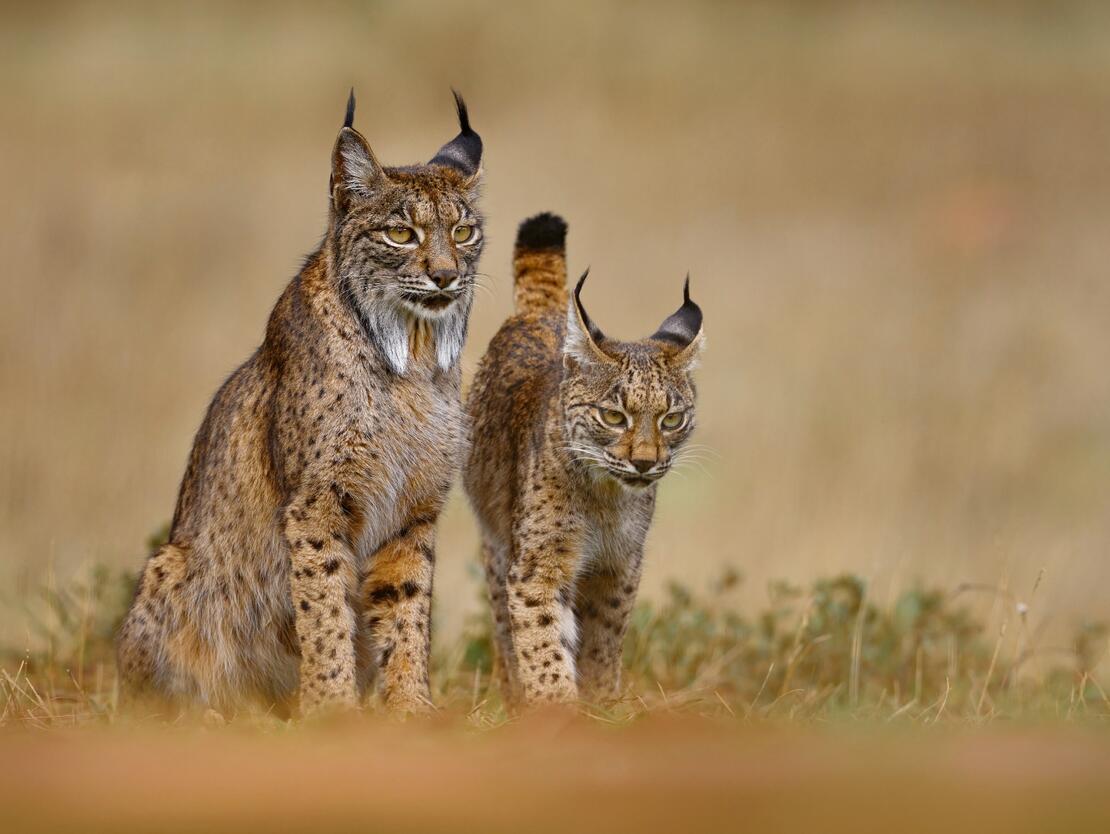
The Iberian lynx is one of the world’s most distinctive and remarkable wild cats. Native to the Iberian Peninsula (Spain and formerly Portugal), this medium-sized feline has had one of the most dramatic conservation stories of any large carnivore in Europe. Once teetering on the brink of extinction, its extraordinary recovery offers hope — and important lessons about habitat, prey-specialisation, and the challenges that remain.
In this article, we’ll explore every essential aspect of the Iberian lynx: its appearance, biology, habitat, threats, conservation efforts, and why it matters — all optimised for SEO around the keyword Iberian lynx.
1. Taxonomy, Evolution & Origins
The Iberian lynx ( Lynx pardinus ) is a distinct species within the lynx genus. It diverged genetically from other lynx species between about 1.98 and 0.7 million years ago. Fossil remains show it has been present in the Iberian Peninsula since at least the end of the Early Pleistocene.
Previously, the species had been lumped with the Eurasian lynx ( Lynx lynx ), but morphological and genetic work has confirmed it as its own species.
2. Appearance & Distinctive Features
The Iberian lynx is smaller than many of its lynx cousins. Adult males typically weigh in the range of about 12-18 kg, females somewhat less.
Key identifying features:
- Bright yellowish-tawny to reddish-brown coat with heavy dark spots (more heavily spotted than many lynx species).
- Tufted ears and the characteristic “ruff” of fur around the face, giving a somewhat framed or “bearded” look.
- A relatively short tail with a dark tip.
- Long legs relative to body size, adapted for going through shrub and uneven terrain.
Because of its striking appearance, many nature tourists find it instantly recognisable — a key part of its value as a flagship species for Mediterranean ecosystem conservation.
3. Where It Lives: Range & Habitat
Range
Historically, the Iberian lynx ranged widely across Spain, Portugal and even into parts of southern France. Over the 20th century however, its range shrank dramatically due to multiple pressures.
Today, viable populations are largely restricted to south-western Spain, especially in Andalusia in areas such as Doñana National Park and the Sierra Morena region.
Habitat
The Iberian lynx favours Mediterranean-type scrub and woodland: open grassland or pasture linked with dense shrub or under-growth, oak and cork-oak forests, and areas where its main prey, the wild rabbit, is abundant.
Importantly, the species does not tend to thrive in monoculture plantations (e.g., eucalyptus or pine stands) or heavily agricultural landscapes where rabbits are scarce.
Thus, suitable habitat is a mosaic of open and dense terrain — the open parts for hunting, the dense parts for cover and resting.
4. Diet & Hunting Behaviour
The Iberian lynx is a specialised predator, and much of its ecology revolves around its prey.
Main Prey
The wild rabbit ( European rabbit, Oryctolagus cuniculus) constitutes the overwhelming bulk of its diet — often reported at 75-90 % or more in certain populations.
Additional Prey
If rabbit numbers drop, the lynx may supplement with other prey: hares, rodents, partridges, young deer or fallow deer, ducks, even fish in rare cases.
Hunting Strategy
The Iberian lynx is a stealthy ambush predator. It uses cover of scrub and undergrowth to approach rabbit warrens or open pastures. Its long legs and muscular build help it spring quickly. Its diet specialisation means that rabbit availability strongly influences its hunting behaviour and success.
Because of the dependency on rabbits, any major decline in rabbit populations directly threatens the lynx. This prey-specialisation is both a strength (very good adaptation) and a vulnerability.
5. Reproduction, Social Life & Behaviour
The Iberian lynx is generally solitary — adults live and hunt alone, except during mating or when mothers are raising kittens.
Reproduction
Females may become reproductive in their second year of life. The breeding season is typically March-April, though if no mating occurs, females may come into oestrus later.
Gestation is about 9 weeks (around 60-70 days) and litters average around 2–3 cubs. Survival of offspring may depend heavily on prey availability and habitat security.
Kittens stay with their mother for up to 10 months or more, learning hunting skills and exploring the territory before they disperse (which may occur between 8 and 23 months). Dispersal is a risky period with high mortality.
Territory & Home Range
Territory sizes vary by sex and prey density. In one study in Sierra Morena, female home ranges averaged about 9.5 km², males about 18.2 km².
Adult lynx mark territories by urine, scratch marks on trees and scat. Their activity is often crepuscular (dawn and dusk), shifting more nocturnal in summer and more diurnal in winter.
Read too : Antlered Animals Of Yellowstone National Park: A Majestic Array Of Wildlife
6. Why the Iberian Lynx Became Critically Endangered
Although the Iberian lynx is now recovering, for decades it faced one of the most severe declines of any feline in the world. Key factors include:
- Decline of its Prey (Rabbits): Diseases such as myxomatosis and rabbit haemorrhagic disease devastated European rabbit populations, which the lynx heavily depends on.
- Habitat Loss & Fragmentation: Agricultural expansion, forestry plantations, urban development, and road networks broke up the mosaic habitat the lynx needs.
- Poaching, Hunting & Persecution: The lynx was historically hunted and persecuted (e.g., during the 20th century in Spain) and even though it is now legally protected, illegal killings still occur.
- Small Isolated Populations & Genetic Bottleneck: As populations shrank and fragmented, genetic diversity fell and risk of inbreeding increased.
- Road Mortality & Other Human-caused Deaths: As populations regained size, roads and collisions become a major threat.
These combined pressures drove the population down to fewer than 100 individuals in the wild by the early 2000s.
7. Conservation Efforts & Recent Recovery
The Recovery Story
Perhaps the most inspiring chapter in the Iberian lynx’s history is its recent rebound. Conservation efforts have included:
- Intensified monitoring and research.
- Captive-breeding and reintroductions of lynx into the wild in suitable habitats.
- Rabbit population restoration (restocking and management of disease).
- Habitat restoration and the creation of habitat corridors.
- Legal protection and public-awareness campaigns.
As a result of these efforts, the species’ status improved. In June 2024 the International Union for Conservation of Nature (IUCN) reclassified the Iberian lynx from “Endangered” to “Vulnerable”.
Numbers: From just ~94 individuals in 2002, the population is now above 2,000 in the wild.
Why This Matters
This success story shows that with coordinated action, habitat restoration, species-specific prey management and strong protection, even a species near extinction can rebound. For conservationists around the world, the Iberian lynx is a beacon of hope.
Challenges Still Ahead
Despite the triumphs, the work is not done:
- Rabbit populations remain vulnerable to disease and decline, which still threatens the lynx.
- Human–wildlife conflict, especially with farmers/hunters, is escalating in some areas.
- Road mortality and infrastructure fragmentation continue to kill lynx or block dispersal.
- Climate change and increasing fire risk in Mediterranean ecosystems may reduce habitat quality.
- Genetic health and connectivity of populations remain a concern after heavy bottlenecks.
8. Why the Iberian Lynx Matters: Ecological, Cultural & Conservation Value
- Ecological Role: As a top predator in its ecosystem, the Iberian lynx helps maintain healthy rabbit and other prey populations, which can influence vegetation, seed-dispersal and broader ecosystem dynamics.
- Indicator of Ecosystem Health: Because of its prey-specialisation and habitat needs, the lynx is a good indicator species for Mediterranean scrubland health.
- Flagship / Keystone Species: Its survival galvanises human efforts to protect large tracts of habitat, benefiting many other species.
- Cultural & Tourist Value: The species has symbolic value for Spain and Portugal and attracts wildlife tourism, which can benefit local economies and raise awareness.
- Conservation Learning Model: Its recovery is studied globally as a model for how to rescue a specialised carnivore from the brink.
9. How You Can Help the Iberian Lynx
- Support organisations working on lynx conservation (research, habitat restoration, anti-poaching measures).
- Promote and support sustainable land-use in Mediterranean regions (which benefits the lynx and its prey).
- Raise awareness about the lynx’s plight and success story — stories like this help build political and public support.
- If you travel in Spain (particularly Andalusia) consider responsible ecotourism experiences that respect wildlife and support local communities.
- Encourage road-planning and infrastructure that includes wildlife corridors and mitigates road-kill risks.
10. FAQ – Frequently Asked Questions
Q: How many Iberian lynx are there today?
A: As of recent estimates, over 2,000 individuals are in the wild, up from fewer than 100 in the early 2000s.
Q: Why is the Iberian lynx so specialised on rabbits?
A: The lynx evolved in Mediterranean environments in which the European rabbit provided an abundant prey base; over time the lynx’s hunting and digestive adaptations became tightly coupled to rabbits. This specialisation gave it an edge — but also creates risk when rabbit populations crash.
Q: Is the Iberian lynx dangerous to humans or livestock?
A: No. Attacks on humans are unknown. Occasional predation on smaller prey occurs, but livestock predation is very rare. The biggest conflicts arise from hunters/farmers concerned about game or small domestic animals.
Q: What is the lifespan of an Iberian lynx?
A: In the wild, they live up to around 13 years; in captivity they might live a little longer under optimal conditions.
Q: Where is the best place to see an Iberian lynx in the wild?
A: Southern Spain — Andalusia’s national parks such as Doñana and the Sierra Morena region are prime habitats. Note: Lynx sightings are rare and you should go with a licensed guide who respects wildlife-viewing ethics.
The Iberian lynx is more than just a beautiful wild cat — it’s a symbol of what can be achieved for wildlife when humans commit to conservation. From the brink of extinction to a credible rebound, the story of Lynx pardinus reminds us that vulnerable ecosystems, if treated with care, can recover.
But the story isn’t finished. Continued vigilance, habitat protection, prey-management and community engagement are essential if the Iberian lynx is to secure its place in Europe’s wild future.
By protecting the Iberian lynx, we also protect the rich mosaic of Mediterranean scrub, the rabbit-driven food chains, and the broader biodiversity of a unique region. It’s a win-win for wildlife, ecosystems and people alike.