

Introduction
When a well-known regional breakfast chain like Jack’s Donuts—founded in 1961 in New Castle, Indiana—announces a Chapter 11 bankruptcy filing, the implications ripple across its brand, franchisees, suppliers and even the broader donut/fast-food industry. In this article we’ll delve into who the company is, why the filing happened, how Chapter 11 works, what it means for franchisees and customers, and what the broader lessons may be for food service chains.
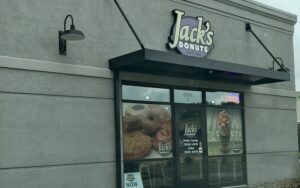
Background: Jack’s Donuts at a Glance
- Jack’s Donuts of Indiana Commissary LLC (the franchisor’s commissary/distribution entity) filed for Chapter 11 bankruptcy protection on October 29, 2025 in the U.S. Bankruptcy Court for the Southern District of Indiana.
- The chain has roughly 24 locations, with 14 of them franchise-owned.
- Financial filings show liabilities of about US$14.2 million and assets (personal property) of about US$1.4 million for the commissary entity.
- The chain has a legacy of over 60 years in business, making this filing especially notable for a brand that seemed established.
Why Did Jack’s Donuts File for Chapter 11?
Several key factors converged:
1. Mounting Debt & Legal Judgments
- The filing lists more than 100 creditors.
- Among them: Old National Bank with a ~$3.5 million judgment; transportation firm Carter Logistics with unpaid delivery bills.
- Litigation and state regulatory action: The Indiana Secretary of State issued a cease-and-desist order alleging unregistered securities were offered by CEO Lee Marcum and affiliated entities.
2. Operational & Franchise Issues
- In October 2023 Jack’s opened a large production and distribution facility (the commissary) in New Castle, Indiana.
- Franchisees allege that they were compelled to stop baking in-house and instead purchase from the commissary—reducing autonomy and possibly harming product quality.
- Reports of declining sales, franchisee dissatisfaction, and corporate-franchise tensions.
3. Business Model & Debt Mismatch
- With assets of only ~$1.4 million against liabilities of ~$14 million+, the commissary entity was structurally insolvent under normal operational conditions.
- The Chapter 11 filing appears to target the corporate commissary rather than individual stores—but the burden of the debt ultimately affects the brand ecosystem.
What Is Chapter 11 Bankruptcy?
For readers who may not be familiar:
- Chapter 11 of the U.S. Bankruptcy Code allows a company (or other entity) to reorganize its business, debts and operations under the supervision of the bankruptcy court while continuing operations.
- The alternative, Chapter 7, would typically mean liquidation: selling assets, closing operations. Chapter 11 aims to preserve the business and value for creditors, employees, customers and other stakeholders.
- Key steps in Chapter 11: the debtor remains “debtor-in-possession,” develops a reorganization plan, seeks court and creditor approval, and emerges (or doesn’t) with a reorganized structure.
What the Filing Means for Jack’s Donuts Franchisees & Customers
Franchisees
- The bankruptcy filing is specified as applying to the franchisor-related commissary and certain affiliated entities—not to the independent franchisees.
- “Our stores remain open… no independently owned franchisee is subject to this action,” the company stated.
- However, even if stores remain open, franchisees may face indirect risk: supply disruptions, brand reputation damage, renegotiated franchise terms, or even changes in supply chain/commissary structure.
Customers
- According to statements, local Jack’s Donuts locations will continue business as usual—serving donuts, coffee and breakfast.
- Nonetheless, customers may experience changes in product quality or menu if the reorganization leads to cost-cutting or supply chain shifts.
- The filing and the publicity around it may harm consumer confidence (brand perception risk).
Suppliers & Creditors
- Suppliers owed money by the commissary may find themselves in the bankruptcy queue—meaning delayed payments or partial recoveries.
- Creditors such as logistics firms and banks may negotiate through the bankruptcy process for partial repayment or debt restructuring.
Risks & Opportunities for the Brand
Risks
- Brand erosion: A legacy 60-year chain filing for bankruptcy may lose customer loyalty, making recovery harder.
- Supply chain disruption: If the commissary is reorganised, supply continuity could be affected.
- Franchisee friction: Franchisees already expressing dissatisfaction may push harder for change—or even exit.
- Regulatory exposure: The unregistered securities investigation poses reputational risk.
Opportunities
- Restructuring: Chapter 11 gives the company a chance to shed legacy liabilities, renegotiate contracts and refocus the business.
- Brand reset: If managed well, the brand could emerge leaner, stronger and better aligned with current breakfast/fast-casual trends.
- Franchise win-back: With renewed focus on franchisee relations, the chain could modernise and rebuild trust.
- Competitive position: With fewer players in the donut-breakfast space struggling, Jack’s might capture share if it executes the turnaround.
What Happens Next? Key Milestones
- Initial Filing & Interim Operations – The filing happened on October 29, 2025; the business continues day-to-day operations.
- Disclosure Statement & Reorganisation Plan – The company must file an outline of how it intends to restructure debt, assets and operations.
- Creditor Meetings & Court Hearings – Creditors will review the plan, vote, and objections can be raised.
- Plan Confirmation & Emergence – If successful, the company emerges from Chapter 11 with a new capital/debt structure; otherwise it may convert to Chapter 7 or sell assets.
- Post-Emergence Monitoring – Execution of the plan is critical; failure here often leads to relapse or liquidation.
Industry Context: Why Food Chains Are Filing Chapter 11
- The food service/fast-casual/donut sector has faced multiple headwinds: rising labour costs, inflation in ingredients, supply chain disruptions, changing consumer behaviour.
- Even established brands are not immune — recent filings include other chains dealing with legacy cost structures and changing market conditions.
- In this context, Jack’s Donuts’ filing is part of a broader pattern: firms must either adapt or face restructuring.
What This Means for the Breakfast/Donut Market
- Customers may see fewer independent donut shops if brands fail to stabilise.
- Smaller chains may face heightened risk or consolidation pressure.
- Supply chain consolidation: Commissaries and centralised production models (like Jack’s) may be re-evaluated in favour of localised, flexible models.
- Franchising dynamics: Franchisees are likely to demand greater operational autonomy if corporate becomes a weak link.
Key FAQs & Takeaways
Q1: Does this mean all Jack’s Donuts stores are closing?
No — the filing applies to the commissary/franchisor entity, not individual franchisee-operated stores. The company states that stores remain open.
Q2: Is the Jack’s brand dead?
Not necessarily. Chapter 11 is a reorganisation tool, not an automatic liquidation. If the plan succeeds, the brand may survive and possibly flourish.
Q3: Why was the commissary entity so leveraged?
Operating a centralised production and distribution facility is capital-intensive; combined with legal judgments, franchise tensions and operational missteps, liabilities mounted.
Q4: What should franchisees and suppliers do now?
Franchisees should monitor communications closely, ensure supply continuity, renegotiate terms if needed, and engage with corporate. Suppliers should register claims, attend creditor meetings and plan for possible reduced recovery.
Q5: What’s the broader lesson for fast-casual / donut brands?
- Never underestimate supply chain risk and franchisee relations.
- Be cautious about rapid expansion or centralisation without clear cost control.
- Keep liability structures manageable and avoid over-leveraging.
- Maintain product quality and brand trust even during operational change.
Conclusion
The filing of Chapter 11 by Jack’s Donuts of Indiana is more than just another bankruptcy—it’s a cautionary tale for regional chains in the fast-moving breakfast/donut segment. With more than 60 years of brand heritage behind it, the chain now faces the intricate task of reorganising under court supervision while maintaining daily operations, supporting franchisees and preserving customer trust.
For franchisees, the message is clear: stay vigilant, assess supply-chain vulnerabilities and ensure your interests are protected. For customers, the brand may still deliver your favourite donut—and the company assures that stores remain open—but the road ahead is uncertain.
As the industry watches closely, Jack’s case may serve as a bellwether for how legacy food-service brands must adapt in the face of rising costs, changing consumer demand and operational complexity. Whether Jack’s emerges successfully or becomes further restructured remains to be seen—but one thing is clear: even the most familiar donut chain isn’t immune to structural risks.