
Education has always been a cornerstone of human progress, shaping societies and influencing generations. Yet, as technology, pedagogy, and societal expectations evolve, traditional classrooms are being challenged. The concept of the future classroom is no longer a distant vision—it is an emerging reality that promises to reshape how students learn, teachers teach, and institutions operate. This article explores what the future classroom looks like, the technology driving it, and the implications for students, educators, and society.
Read too : Japan’s Quiet Education Revolution: Lessons the World Can Learn
Understanding the Future Classroom
The future classroom represents an educational environment designed to maximize learning, engagement, and adaptability. Unlike traditional classrooms, which often rely on fixed seating, chalkboards, and rigid schedules, the future classroom is flexible, tech-enabled, and student-centered. At its core, it integrates three key pillars: technology, pedagogy, and collaboration.
- Technology: Digital tools, artificial intelligence, and virtual reality transform how students access information and interact with content.
- Pedagogy: Modern teaching strategies, including project-based learning and personalized instruction, ensure lessons cater to individual learning styles.
- Collaboration: Students, teachers, and even global experts can collaborate in real-time, transcending geographic and social boundaries.
The future classroom is not just a physical space—it is a dynamic ecosystem where learning is continuous, engaging, and highly adaptable to student needs.
Key Features of the Future Classroom
1. Technology-Driven Learning
The integration of technology is perhaps the most defining characteristic of the future classroom. Devices such as tablets, interactive whiteboards, and cloud-based learning platforms create a seamless and interactive experience. Advanced technologies like artificial intelligence (AI) and augmented reality (AR) personalize education in ways previously unimaginable.
- Artificial Intelligence: AI-powered platforms analyze students’ performance in real-time, offering customized content and identifying areas for improvement. This allows teachers to focus on mentorship and guidance rather than administrative tasks.
- Virtual and Augmented Reality: VR and AR provide immersive experiences, enabling students to explore historical events, scientific phenomena, or even distant ecosystems without leaving the classroom.
- Gamification: Integrating game elements into lessons motivates students, enhances engagement, and improves retention. Through challenges, rewards, and interactive simulations, learning becomes a more enjoyable experience.
2. Personalized Learning Experiences
No two students learn in the same way. The future classroom leverages data-driven insights to deliver personalized education. AI algorithms track students’ progress, identify learning gaps, and adjust content accordingly. This ensures that students learn at their own pace, mastering concepts before moving forward.
Personalized learning also extends beyond academics. Students receive tailored guidance on developing soft skills such as critical thinking, problem-solving, and collaboration. By emphasizing individual growth, the future classroom nurtures confident, self-directed learners.
3. Flexible Classroom Design
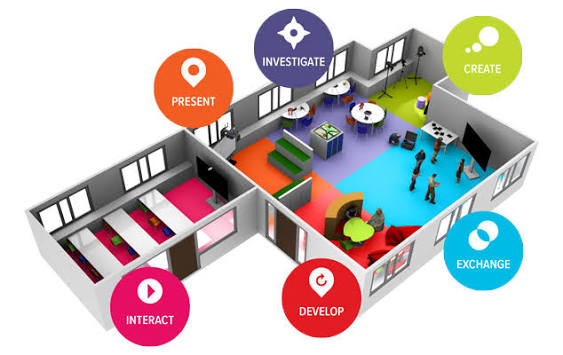
Gone are the days of rows of desks facing a chalkboard. The design of the future classroom promotes collaboration, creativity, and movement. Flexible furniture, modular layouts, and adaptable spaces encourage students to work in groups, engage in hands-on activities, and participate in active learning.
- Collaborative zones: Spaces where students can brainstorm, work on projects, and discuss ideas.
- Quiet zones: Areas for focused, individual work or deep study.
- Tech hubs: Sections equipped with devices, AR/VR stations, and digital labs to facilitate experimentation and innovation.
Flexible classroom design also supports hybrid learning models, where students can participate both in-person and virtually, ensuring inclusivity and accessibility.
4. Emphasis on Critical Thinking and Problem Solving
The future classroom prioritizes skills over rote memorization. Students engage in activities that foster critical thinking, creativity, and problem-solving. By tackling real-world challenges, learners develop the ability to analyze complex situations, collaborate effectively, and innovate.
- Project-Based Learning: Students work on projects that address actual problems, enhancing their understanding and practical application of concepts.
- Design Thinking: Encouraging students to empathize, ideate, prototype, and test solutions promotes innovative thinking.
- Interdisciplinary Approach: Combining multiple subjects enables students to make connections across different domains, preparing them for the complexities of the modern world.
5. Collaborative and Global Learning
In the future classroom, learning is no longer confined by geography. Virtual collaboration tools allow students to connect with peers, experts, and mentors worldwide. This global perspective fosters cultural awareness, communication skills, and teamwork.
- Global Classrooms: Online platforms facilitate cross-cultural projects, connecting students from different countries and backgrounds.
- Peer-to-Peer Learning: Students learn from each other through discussions, feedback, and collaborative projects.
- Community Engagement: Partnerships with local organizations and industries provide practical experience and civic responsibility.
6. Data-Driven Insights
Data plays a crucial role in shaping the future classroom. Learning analytics help educators understand student behavior, engagement patterns, and performance trends. By interpreting this data, teachers can make informed decisions, adapt instructional strategies, and provide targeted interventions.
- Early Warning Systems: Identify students at risk of falling behind and provide timely support.
- Performance Dashboards: Track progress, highlight strengths, and address weaknesses in real-time.
- Adaptive Assessments: Assessments that adjust to student performance, providing an accurate measure of learning.
Technology Shaping the Future Classroom
The technological landscape is rapidly evolving, and several tools are pivotal to the future classroom:
Artificial Intelligence (AI) and Machine Learning
AI transforms education by automating administrative tasks, delivering personalized content, and providing predictive analytics. Intelligent tutoring systems offer real-time feedback, while machine learning algorithms adapt materials based on student performance. AI can even detect learning difficulties, helping educators intervene proactively.
Virtual Reality (VR) and Augmented Reality (AR)
Immersive technologies like VR and AR make learning experiential. Students can explore ancient civilizations, perform virtual science experiments, or simulate complex engineering tasks. These tools enhance engagement, retention, and comprehension.
Cloud Computing
Cloud-based platforms enable access to educational resources anytime, anywhere. Students can collaborate on documents, participate in online discussions, and submit assignments digitally. Teachers can manage curricula, track progress, and communicate with parents efficiently.
Internet of Things (IoT)
IoT devices, including smartboards, sensors, and connected devices, create interactive classrooms. For example, environmental sensors can teach students about sustainability, while smartboards facilitate dynamic, interactive lessons.
Learning Management Systems (LMS)
LMS platforms streamline course delivery, track performance, and facilitate communication. Modern LMSs integrate multimedia resources, adaptive assessments, and gamified elements, enhancing the overall learning experience.
Pedagogical Shifts in the Future Classroom
Technology alone does not define the future classroom. Pedagogical strategies are equally essential:
- Student-Centered Learning: Shifting the focus from teacher-led instruction to student-driven exploration.
- Blended Learning: Combining traditional instruction with online resources to enhance flexibility.
- Flipped Classroom: Students learn foundational content at home and engage in problem-solving activities in class.
- Competency-Based Learning: Progress is based on mastery rather than time spent, allowing personalized pacing.
These approaches cultivate lifelong learners, critical thinkers, and adaptable individuals equipped for the demands of a rapidly changing world.
Teacher’s Role in the Future Classroom
In the future classroom, teachers are no longer mere transmitters of knowledge. They are facilitators, mentors, and learning designers. Their responsibilities include:
- Curating digital resources and designing interactive lessons.
- Guiding students through personalized learning paths.
- Providing mentorship and fostering emotional intelligence.
- Using data to inform instructional strategies.
By shifting their role, teachers can focus on nurturing curiosity, creativity, and collaboration—skills that machines cannot replicate.
Benefits of the Future Classroom
Adopting the principles of the future classroom brings multiple advantages:
- Enhanced Engagement: Interactive technologies and collaborative learning keep students motivated.
- Improved Learning Outcomes: Personalized instruction ensures mastery and retention.
- Skill Development: Students acquire critical thinking, problem-solving, and digital literacy skills.
- Inclusivity: Flexible learning accommodates diverse needs and learning styles.
- Global Perspective: Exposure to international peers and projects fosters cultural competence.
Challenges in Implementing the Future Classroom
Despite its potential, transitioning to the future classroom comes with challenges:
- Cost and Infrastructure: Advanced technologies require significant investment in devices, software, and training.
- Teacher Training: Educators must acquire new skills to effectively integrate technology and modern pedagogies.
- Digital Divide: Socioeconomic disparities can limit access to technology for some students.
- Privacy Concerns: Collecting and analyzing student data raises security and ethical issues.
- Resistance to Change: Traditional educational systems and stakeholders may resist innovative approaches.
Addressing these challenges requires careful planning, investment, and collaboration among policymakers, educators, and communities.
The Future Classroom in Practice
Several schools worldwide have successfully implemented elements of the future classroom:
- Finland: Known for its student-centered approach, Finnish schools emphasize creativity, collaboration, and flexible learning environments.
- Singapore: Leveraging AI, Singaporean schools deliver personalized learning experiences and use data analytics to improve outcomes.
- United States: Innovative charter schools integrate technology, project-based learning, and collaborative spaces to enhance student engagement.
- South Korea: Smart classrooms equipped with VR and IoT devices provide immersive and interactive learning experiences.
These examples demonstrate that the future classroom is achievable and adaptable to different educational contexts.
Preparing Students for a Future-Oriented World
The ultimate goal of the future classroom is to equip students with the skills, knowledge, and mindset required for a rapidly evolving world. Key competencies include:
- Digital Literacy: Understanding and navigating digital tools responsibly.
- Adaptability: Thriving in dynamic and uncertain environments.
- Critical Thinking: Evaluating information and making informed decisions.
- Collaboration: Working effectively with diverse teams.
- Creativity and Innovation: Developing original ideas and solutions.
By focusing on these competencies, the future classroom ensures students are prepared not just for exams, but for life.
Conclusion
The future classroom is more than a technological upgrade—it is a holistic transformation of education. By combining innovative technology, flexible learning environments, and student-centered pedagogies, it creates an ecosystem that fosters engagement, collaboration, and lifelong learning. While challenges exist, the benefits far outweigh the obstacles, offering students the tools they need to succeed in the 21st century and beyond.
As educational institutions worldwide embrace this vision, the classroom of tomorrow will be a place where curiosity thrives, creativity flourishes, and every student has the opportunity to reach their full potential. The journey toward the future classroom has already begun, and it promises a revolution in how we teach, learn, and grow.